

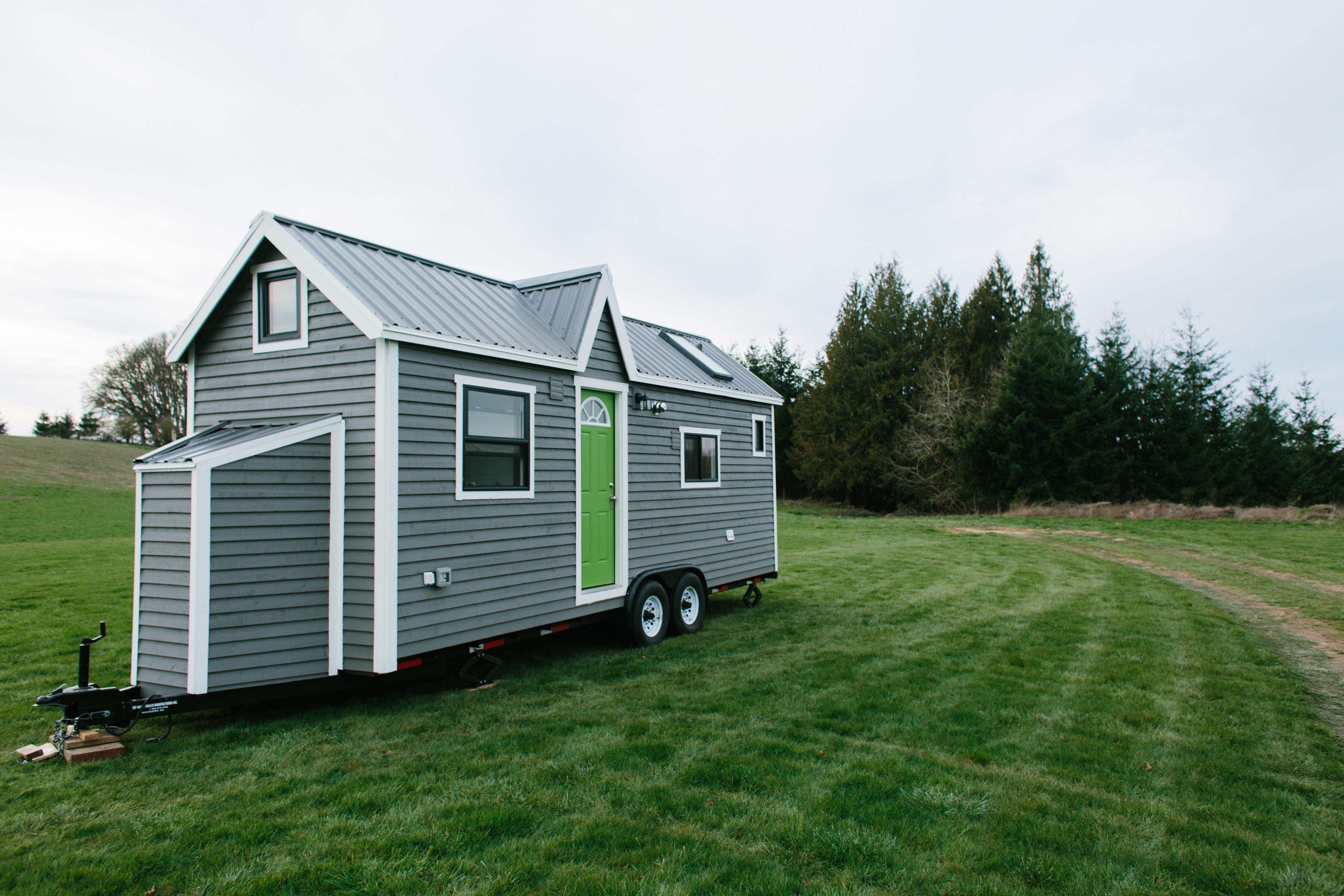
In today's real estate market, the true "gold" isn't found in the polished hardwood of a living room or the marble countertops of a chef’s kitchen. In the landscape of 2026, the real wealth lies in the legal right to build. Portland, with its progressive zoning policies and aggressive "Rip City" density initiatives, has become a global hotspot for tiny house enthusiasts and tactical urbanists alike. If you know how to navigate the bureaucratic map, you can transform a standard residential lot into a high-yield, multi-generational compound, complete with an Accessory Dwelling Unit (ADU) or even a portable tiny home.
This marks the definitive end of the old "square footage race." For decades, buyers were told that bigger was always better. But as property taxes climb and the cost of maintenance skyrockets, the "McMansion" has become a liability. Now, it’s all about flexibility. Modern buyers are hunting for properties that offer more than just a place to sleep; they want "productive land"—assets that provide the potential to grow, whether for additional living space, multigenerational setups, or creating a secondary income stream with a tiny home.
Cracking the Code on Portland ADU Lots
To find a lot that’s perfect for a tiny house or ADU in Portland, you need to look past the curb appeal and dive into the technicalities of local zoning codes. Certain zones, specifically R5 (6,000 sq. ft. average) and R7 (7,000 sq. ft. average), are the primary targets for investors. These designations are key because they determine the minimum lot size required for the primary home while dictating the "allowable envelope" for secondary structures.
In 2026, the city took a radical step forward by relaxing several legacy restrictions. The most significant change was the elimination of off-street parking requirements for accessory dwellings on most residential lots. Previously, the need to provide a paved parking spot for an ADU often ate up the very space intended for the unit itself. Today, the secret to success lies in identifying "deep lots" or "corner lots" with the specific frontage and setbacks required to fit a detached structure without triggering a complex variance process.

The Residential Infill Project (RIP) 2.0
The real catalyst for this "Land Hack" is the evolution of the Residential Infill Project. By 2026, Portland’s laws allow for up to four units on almost any residential lot, and in some cases, six units if they meet certain affordability criteria. This has turned the traditional backyard into a gold mine. Investors are no longer just looking at the house; they are measuring the distance between the driveway and the fence line. They are calculating the "Floor Area Ratio" (FAR) to see if they can squeeze a 2-story "DADU" (Detached ADU) into the rear quadrant of the property.
The Psychology of Visual Expansion through Light
When working with a small footprint, whether it's a 400-square-foot tiny home or a converted garage, one of your most powerful architectural tools is natural light. In 2026, light is no longer viewed as just an aesthetic choice; it is recognized as a fundamental component of wellness and energy efficiency. A poorly lit home feels cramped and subterranean, triggering a "claustrophobic response" in the brain. Conversely, a space flooded with sunlight feels larger, more open, and biologically uplifting.
This is why Portland Homes for Sale with Sunrooms have seen a massive price premium this year. These glass-heavy spaces serve a dual purpose. First, they act as a "thermal bridge," trapping heat during Portland’s crisp autumn days to reduce utility costs. Second, they create a seamless connection between the interior and the garden. For a tiny home buyer, a sunroom isn't just an extra room; it's a psychological trick that makes a small floor plan feel expansive, even when the Pacific Northwest sky is at its grayest.
Pro Tip: When auditing a lot for a potential tiny home, check the "Solar Orientation." A backyard with a southern exposure is worth 15-20% more to an ADU developer because it allows for passive solar heating and better natural illumination.

Material Intelligence: The Artisan Advantage
In a tiny home, every single square inch is under a microscope. There is no room for "filler" or cheap finishes. In today’s world of mass-produced, flat-packed furniture and synthetic "luxury vinyl" floors, authentic woodwork has become the ultimate symbol of status and soul. The tactile feel of solid oak beams or the rich, swirling grain of reclaimed walnut floors brings a natural warmth that a factory-made laminate simply cannot replicate.
This deep appreciation for craftsmanship is leading a new generation of buyers to seek out homes with original, "untouched" features. They are increasingly seeking out Pre War Homes in Portland because these structures showcase the intricate millwork and "old-growth" timber that are nearly impossible to find in 2026. For those building new tiny homes, the trend is "Artisan Integration"—salvaging architectural elements from these historic homes and breathing new life into a modern, compact footprint. This blend of old-world soul and new-world efficiency creates a "Green Modernism" that holds its value far better than generic new construction.
Designing for a Sustainable Future
The buyers of 2026 are not just looking for a roof over their heads; they are looking for a hedge against climate change and rising energy costs. This is why Solar Townhomes and Eco-Friendly Condos are no longer niche products, they are the market leaders. These homes focus on "Extreme Efficiency," utilizing high-performance materials like cross-laminated timber (CLT), stone, and recycled steel.
The sustainability movement has moved beyond just "solar panels on the roof." It is now about "Material Intelligence." Buyers are asking about:
-
Thermal Mass: Using stone or concrete floors to regulate temperature naturally.
-
Vapor Permeability: Ensuring the home "breathes" to prevent mold in the damp Oregon climate.
-
Carbon Sequestration: Choosing wood products that store carbon rather than emitting it during production.
Whether you are looking at a sleek, Millennial Downtown Portland Condo or a hand-crafted tiny home in the Alberta Arts District, the future of design is rooted in how a space makes us feel, and how little it costs the planet to keep it running.
The Financials of the Land Hack
Let’s look at the numbers. In 2026, a well-placed ADU in Portland can command anywhere from $1,800 to $2,600 in monthly rent, depending on the neighborhood. With construction costs for a high-end unit hovering around $200,000, the "Cash-on-Cash" return is significantly higher than buying a second standalone rental property. Furthermore, the added value to the total property usually exceeds the cost of construction by 1.5x.
|
Feature |
Traditional Rental |
Portland Land Hack (ADU) |
|
Initial Investment |
High (Full Property) |
Moderate (Backyard Build) |
|
Property Taxes |
High (Separate Bill) |
Incremental Increase |
|
Zoning Flexibility |
Rigid |
High (RIP 2.0 Policies) |
|
Maintenance |
Entire Structure/Yard |
Compact/Shared Systems |
The Preservation of Regional Identity
Rethinking the future of Portland design means understanding that the "Holy Grail" of real estate isn’t found in a catalog or a suburban sprawl development. It is found in the careful preservation and "gentle densification" of our existing neighborhoods. Whether you’re hunting for a Large Historic Home with Grandiose Porches to convert into a co-living space, or a modest bungalow with a massive backyard, the goal remains the same: you’re looking for a property with a story to tell and the legal "bones" to grow.
We are finally at a point where 21st-century technology, from AI-driven zoning searches to precision-cut modular homes, is helping us save 20th-century neighborhoods. We are no longer just looking for four walls and a roof. We are using the "Land Hack" to find the architectural soul of our cities and build a more flexible, sustainable, and profitable future.

Share: