

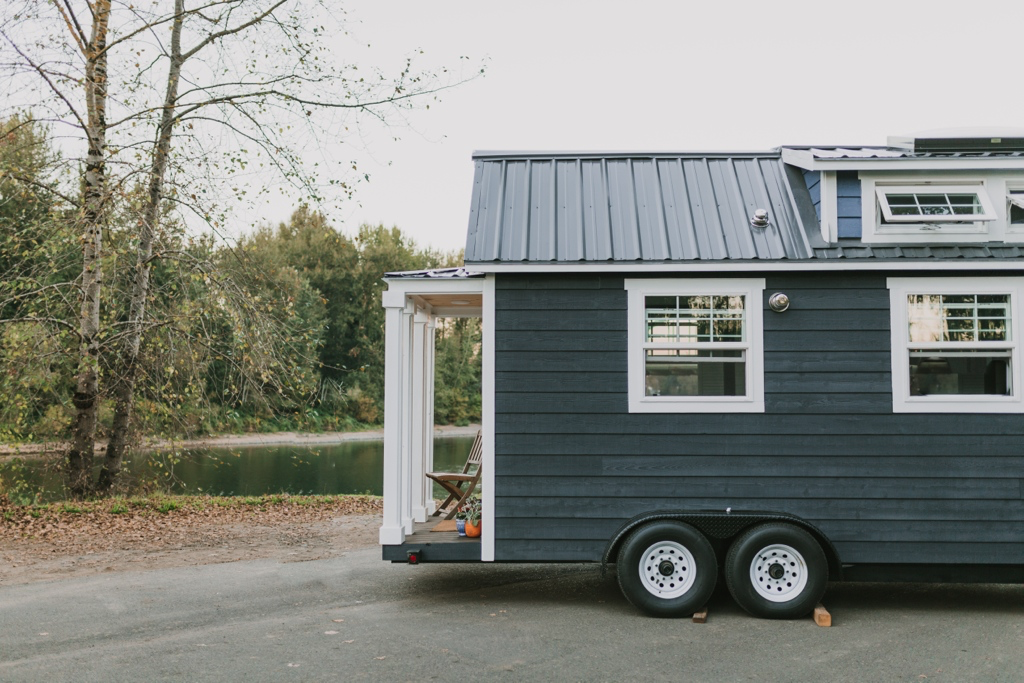
Tiny homes, cabin builds, and compact living structures present a particular set of specification challenges when it comes to exterior materials. The surface area to treat is smaller than a conventional house — but the material choice matters just as much, and in some ways more.
A tiny home that weathers poorly, requires frequent maintenance, or develops structural issues in its cladding or decking within five years of completion loses a disproportionate amount of its appeal and value relative to the repair cost.
The good news is that the timber species and systems used on premium full-size residential projects are equally available for tiny home and compact build applications — often at lower total cost than their conventional counterparts, simply because the quantities required are smaller.
Getting the specification right from the outset is entirely achievable with the right information.

Decking for Tiny Homes: What Actually Works
For tiny homes, garden studios, and compact cabin builds, decking serves a purpose that goes beyond aesthetics.
A well-designed deck extends the usable living space of a compact structure — creating an outdoor room that connects interior and landscape and makes the overall footprint feel significantly larger than the floor plan suggests.
The material choice for this deck matters because it will be visible and used daily, it will be exposed to all UK weather conditions without the shelter that a full-size house provides on multiple sides, and it needs to perform for the full service life of the structure without requiring maintenance that disrupts the enjoyment of the space.
The most common mistake in tiny home and cabin builds is specifying standard pressure-treated pine decking in the interests of cost control.
The saving at purchase — typically £15 to £25 per square metre against naturally durable alternatives — is consumed within three years by the maintenance cost: pressure washing, re-oiling or re-treating, replacing boards that have cupped or split at fixing points. For a deck that may be only 10 to 15 square metres, the total maintenance cost over ten years can easily exceed the upfront saving.
Siberian larch and thermally modified ThermoWood both offer natural durability and low maintenance at price points that, over a 20-year period, represent better value than pressure-treated softwood even with their higher upfront costs. For a tiny home where the deck is a primary living space used in all seasons, this whole-life calculation is the correct way to evaluate the specification.
For a complete breakdown of what timber decking actually costs in the UK in 2026 — by species, by profile, and by grade — including supply-only prices for Siberian larch, ThermoWood, hardwoods, and pressure-treated softwood alongside honest maintenance cost projections, the timber decking cost per m² UK 2026 guide provides the numbers needed to make an informed specification decision before ordering materials for a tiny home or cabin deck project.

Cladding for Tiny Homes: Getting the Exterior Right
The exterior cladding of a tiny home or cabin does more visual work per square metre than the cladding of a conventional house. There is less building to look at, which means every material choice is more prominent and every detail is more visible. A poorly chosen cladding material — one that weathers unevenly, requires frequent maintenance, or looks out of place in its landscape — is significantly more damaging to a tiny home's appearance than the same choice on a larger building where it might go unnoticed.
The best cladding choices for tiny homes and cabin builds share several characteristics: they weather consistently and attractively without requiring intervention, they suit the informal, landscape-connected aesthetic that most compact living structures aspire to, and they are available in profiles and dimensions that work at the smaller scale of a compact build without looking oversized or industrial.
Siberian larch weatherboarding and shadow gap cladding both suit the informal character of cabin and tiny home architecture well. ThermoWood in shadow gap or shiplap profiles adds a more contemporary edge while retaining the warmth of natural timber. Charred timber — Shou Sugi Ban — offers the most dramatic visual impact, with a deep black finish that reads powerfully against natural landscape settings and requires almost no maintenance over its service life.
For the full range of cladding, decking, and accessories for tiny homes, cabins, and compact builds — including samples service, technical specifications, and a quote facility — Timber Cladding Specialists UK supplies all the main timber species and profiles from UK stock with nationwide delivery, and the team can advise on species selection, profile choice, and fixing systems for any compact build application.
The Details That Make Compact Builds Last
For tiny homes and compact structures, the installation details that most affect long-term performance are the same as for any timber clad building — but the consequences of getting them wrong are amplified by the structure's exposure and the prominence of every surface.
Ground clearance is critical: all cladding should terminate at least 150mm above finished ground level to prevent persistent moisture contact at board ends. Ventilation is equally important — a drained and ventilated cavity behind all cladding allows moisture to escape and prevents the accumulation that causes biological decay even in durable species. End grain sealing at all cut board ends is a low-cost step that significantly extends the life of any timber species by reducing the moisture uptake that causes end-checking and decay at the most vulnerable points.
For decking, adequate drainage fall — a minimum 1 in 60 across the deck surface — combined with correct board spacing prevents the water pooling that accelerates surface deterioration and biological growth. On an elevated deck, ensuring the subframe is appropriately sized and that joists are not in contact with soil or debris removes the primary risk of structural failure over the long term. Small details, correctly executed, mean the difference between a tiny home that looks better every year and one that requires remedial work within a decade.
Share: