

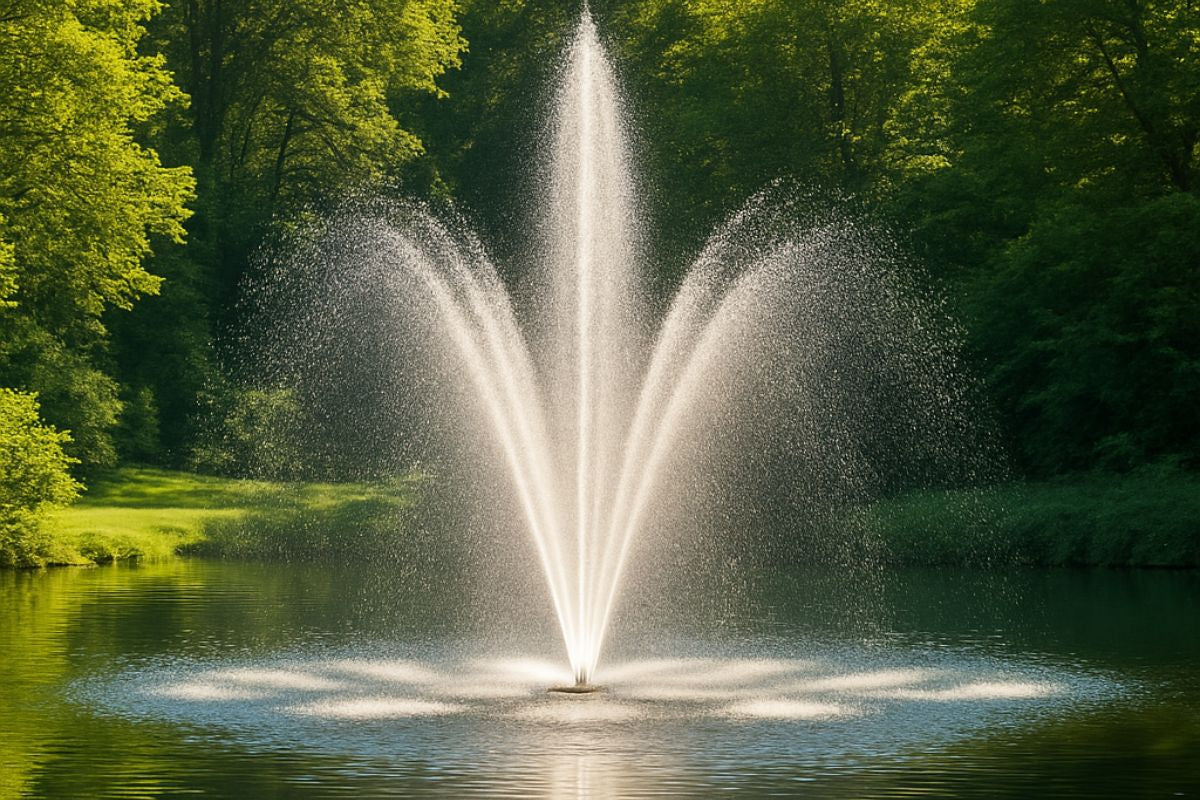
Your tiny house is a masterpiece of efficiency, but what about the view from your window? The yard for a tiny homeowner isn't just grass. It's your outdoor living room, utility hub, and private escape. If that space feels more functional than magical, it's time for a sonic upgrade.
Adding pond fountains is the single best way to introduce the soothing soundtrack of running water right to your doorstep. It instantly transforms a static yard into a peaceful focal point, naturally improving water quality, attracting birds, and sending mosquitoes packing.
How Pond Fountains Fit Into Your Small Yard
Tiny house lots tend to be compact, so every feature has to earn its place.
Attractive water features can enhance property appeal, and natural elements consistently rank among homeowners' most valued outdoor amenities. For tiny homes, where outdoor space is a major part of livability, a modest, well-maintained water feature is best viewed as an enjoyment upgrade first and a potential resale bonus second. After all, a feature that enhances property appeal is nice, but one that enhances your daily peace is essential.
The key for small yards is scale. A compact fountain with a simple spray pattern usually looks more intentional than an oversized geyser that throws water onto pathways, decks, or the tiny house itself.
What Pond Fountains Actually Do
Beyond their beauty, pond fountains serve important functional purposes by providing aeration and circulation. When paired with effective nutrient and plant management, mechanical aeration can significantly improve pond health.
Here's what aeration means for your backyard pond:
-
Keeps water healthy for fish and beneficial microbes.
-
Prevents stagnant, oxygen-poor water (a common issue in still ponds).
-
Helps limit unpleasant odors caused by low-oxygen conditions.
-
Makes algae problems easier to manage (though not eliminate them on its own).
-
Keeps surface scum and debris moving for easier skimming.
Pond Fountains and Mosquitoes
Mosquitoes prefer still or poorly maintained standing water, which is why public health experts recommend refreshing any standing water at least weekly.
A fountain is not a complete mosquito control system, but the moving water can make your pond less attractive to many species that like stagnant surfaces. You still need to:
-
Avoid shallow, stagnant puddles or containers near the pond
-
Clean birdbaths, buckets, and trays frequently
-
Work with local mosquito control programs if you notice chronic problems
Think of pond fountains as part of a broader water-quality and mosquito-management plan rather than a standalone fix.
Types of Pond Fountains for Small Yards
Decorative Pond Fountains for Compact Ponds
For preformed ponds, stock-tank ponds, or half-barrel features, a small submersible pump with a decorative nozzle is often enough. These decorative pond fountains:
-
Use relatively low power
-
Are easy to hide with rocks or planting
-
Focus on creating a small but noticeable spray or bubbling effect
Because the water volume is small, you still need regular partial water changes and good filtration. A fountain alone won’t keep a tiny pond clear if it is overloaded with fish or nutrients.
Floating Pond Fountains for Slightly Larger Water Bodies
If your tiny house sits on a property with a natural or lined pond, a floating fountain can be a flexible choice. These units:
-
Sit on the surface and are anchored rather than mounted rigidly.
-
They are relatively easy to install, since you do not need to work on the bottom.
-
It can often be repositioned if you add a deck or shift your outdoor layout.
Floating fountains for small ponds work best with moderate spray heights and good circulation rather than dramatic “show” patterns. That balance usually suits compact yards better and keeps the spray inside the pond footprint.
Aerating Pond Fountains for Fish and Water Quality
Where fish health and long-term water quality are priorities, many pond managers use aerating fountains or diffused aeration. Mechanical aeration helps maintain healthy oxygen levels for fish, especially during hot summer periods when ponds are most vulnerable to oxygen depletion.
In a tiny house context, an aerating fountain is a good match if:
-
You keep fish and want a margin of safety during heat waves.
-
The pond is deeper than about 6 to 8 feet in places.
-
You prefer a practical, moderately tall spray over a very delicate pattern.
Diffused aeration systems that release bubbles from the bottom are another option if you want the benefits of aeration without a visible fountain, but they provide less visual and sound effect than many tiny house owners are looking for.

Special Considerations: Tiny Homes on Existing Ponds
If your tiny house is situated directly on the shore of a larger, existing pond or lake (natural or lined), your approach to pond fountains shifts from creating a feature to enhancing a resource.
In these environments, the fountain is typically less about visual scale and more about functional circulation to support the overall health of the water body.
Design and Functionality:
-
Go for Aeration First: On larger ponds, the primary goal of any fountain should be aeration. This is especially true if the pond is prone to algae issues or supports a fish population. An aerating fountain or a diffused aeration system will provide the most benefit to the entire ecosystem.
-
Balance Aesthetics and Power: While you still want an attractive feature, avoid choosing a fountain that looks undersized compared to the pond or one that requires excessive cable runs. Floating pond fountain units are often ideal here, as they can be positioned far from the shore (using submersible cables) to circulate water at the center of the water body, where stagnation often begins.
-
Permitting and Regulations: Before installation, check with local authorities, homeowner associations, or environmental groups. Ponds connected to public waterways or those classified as wetlands may have restrictions regarding pump placement, power consumption, and water disturbance.
Why Fountains are Vital Here:
For a tiny home owner whose backyard is the pond, water quality directly affects daily enjoyment, from the air's smell to the view out the window. A well-placed pond fountain works hard by:
-
Reducing surface biofilm and excessive duckweed that can accumulate along the shore.
-
Improving the oxygen exchange necessary for healthy aquatic life.
-
Creating sound to mask other ambient noises common in larger property settings.
Design Tips so Pond Fountains Work with Tiny House Plans
Tiny home owners often think in terms of floor plans and sight lines. It helps to treat your pond and fountain like another room.
A few planning ideas:
-
Check your main views. Sketch sight lines from key windows and outdoor seating to ensure your fountain enhances views without overwhelming them. Consider a deck along with a pond installation to enhance your outdoor living space.
-
Avoid “splash zones.” Leave enough distance between the spray and decks, doors, and exterior walls so wind-blown droplets do not create slippery surfaces or moisture problems.
-
Match Style to Architecture.
-
Clean, vertical jets pair well with simple, modern tiny houses.
-
Softer bubbling or tiered sprays can complement rustic or cottage-style structures.
-
Naturalistic, multi-tier sprays blend beautifully with farmhouse or traditional tiny homes.
-
Balance Plants and Hardware. Use aquatic plants and shoreline plantings to soften the hardware of pumps, cords, and anchors while keeping access open for maintenance.
Thinking through these points up front helps the fountain feel integrated rather than bolted on.
Maintenance and Safety Basics for Pond Fountains
A simple weekly routine keeps everything running safely.
-
Clean Intakes and Nozzles. Check for leaves, algae, and debris that can clog the pump. Blockages force the motor to work harder, shortening its lifespan.
-
Inspect Electrical Connections. Use outdoor-rated cords and outlets with ground-fault protection, and have any new wiring installed by a qualified electrician.
-
Follow Seasonal Guidance. In cold climates, manufacturers often recommend removing units for winter to prevent ice damage. In warm climates, focus on cleaning and monitoring water levels during drought or heat waves.
-
Watch Overall Pond Health. Aeration helps, but you still need to manage nutrients from fish food, leaves, and runoff. University extension resources on pond water quality emphasize that preventing excessive nutrient buildup is just as important as adding circulation.
With a small pond, these tasks rarely take more than a few minutes per week once everything is dialed in.
Bringing it All Together
Choosing the right pond fountain for a tiny house yard is less about chasing the most dramatic spray and more about matching the fountain to the size, power limits, and daily rhythms of your space. Handled this way, a modest pond fountain can provide years of sound, movement, and wildlife interest in a compact footprint, while supporting healthier water and more enjoyable outdoor living.
It's one of those small touches that make compact living feel truly expansive.


Share: