

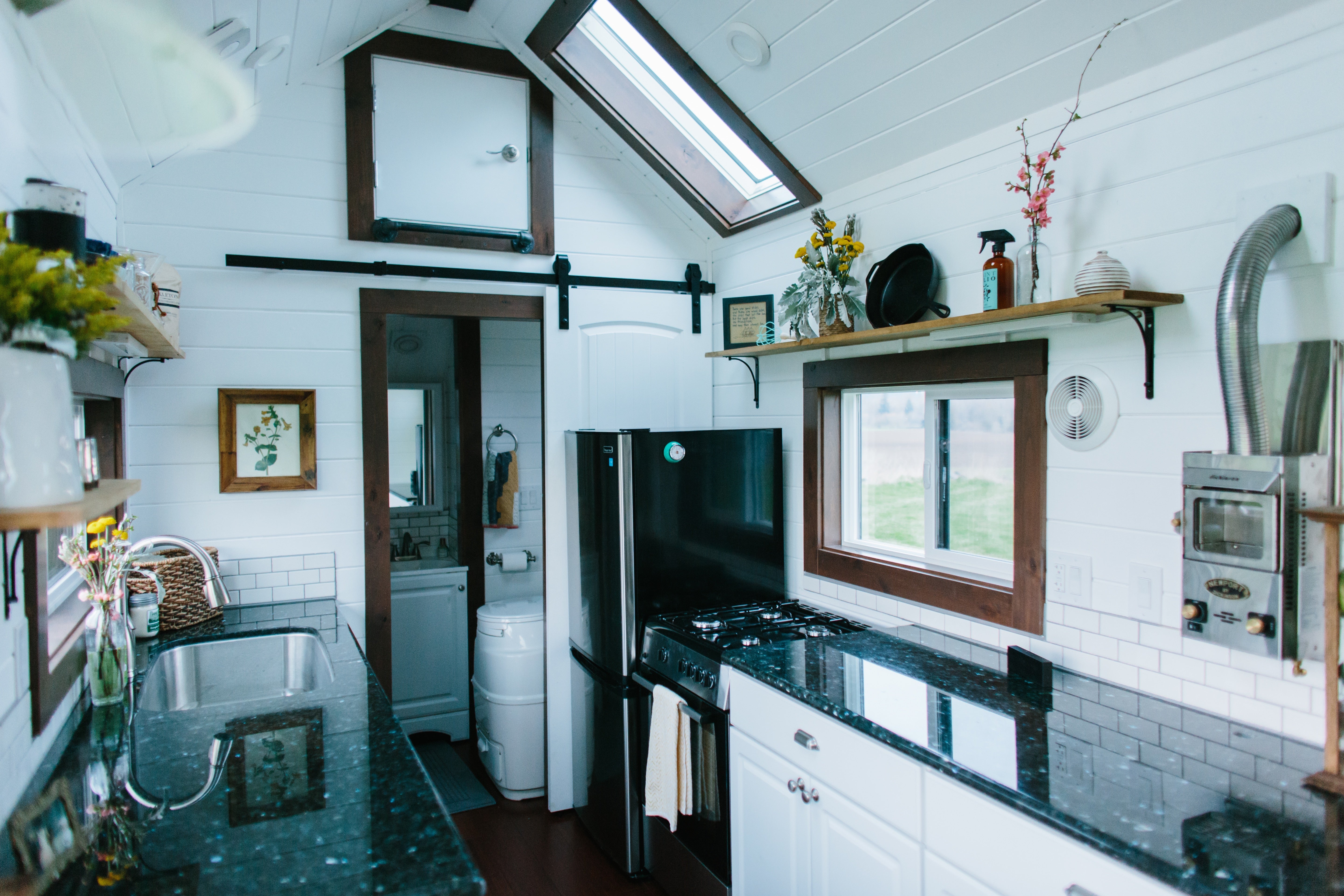
When you decorate a tiny home, you can’t treat space like it’s unlimited. You’ll get better results if you map daily zones, protect clear walkways, and pick furniture that earns its footprint.
Keep your palette tight, go light on walls, and layer lighting to stretch the room. Built-ins can hide clutter fast, but a few common choices can shrink everything—so it helps to know what to stop doing first…
Key Takeaways
-
Do plan clear zones for sleeping, cooking, and work; don’t block straight walkways between key areas.
-
Do use light neutrals and a two-to-three color palette; don’t overmix patterns or dark hues that shrink the space.
-
Do maximize daylight with sheer coverings and layered lighting; don’t use heavy drapes or rely on one overhead fixture.
-
Do choose multi-functional, compact furniture; don’t buy bulky pieces that serve only one purpose.
-
Do build in storage with drawers, shelves, and bed platforms; don’t clutter counters or add decor “just in case.”
Plan Your Tiny Home Zones and Walkways
Before you buy furniture or hang art, map how you’ll actually move through your tiny home. Sketch your daily routines: wake, dress, cook, work, relax. Then assign each action a clear zone layout—sleeping, cooking, dining, storage—so items live where you use them. Keep zones flexible with fold-down surfaces and nesting pieces, but don’t blur them into clutter.
Protect walkway flow like it’s a utility line. Leave straight paths between entry, kitchen, bath, and bed; avoid zigzags around chairs or bins. Measure door swings, drawer pulls, and sofa depth, then place furniture to open fully without collisions. Anchor large pieces to walls, and keep the center open for easier living.

Use Color and Lighting to Open Up a Tiny Home
Once your zones and walkways make sense, use color and lighting to make the same footprint feel larger and calmer. Lean on color psychology: light neutrals push walls back, while warm whites keep the space inviting. Limit your palette to two or three hues, then repeat them in small accents for visual order. Paint trim and ceiling a shade lighter than walls to lift the height without clutter.
Maximize daylight by keeping window coverings simple and sheer. Use layered lighting techniques: a bright, even ambient base, targeted task light where you work, and subtle accent light to soften corners. Aim fixtures upward or onto pale surfaces to bounce light and reduce harsh shadows. Choose consistent bulb temperatures so the tiny home feels cohesive.
Choose Tiny Home Furniture That Does Double Duty
Although you don’t have much square footage to spare, you can make every piece earn its keep by choosing furniture that does double duty. Start with multi functional furniture that shifts with your day: a drop-leaf table that becomes a desk, nesting stools that tuck away, and a slim bench that pulls up for dining.
Prioritize space saving designs with clean lines and light visual weight, so the room feels open even when you’re using everything. Choose a sofa that converts to a guest bed, a coffee table that lifts to work height, and a folding screen that defines zones without closing them in. Keep proportions tight, skip bulky arms and deep bases, and measure clearance for movement. If a piece can’t serve at least two roles, don’t bring it home.
Add Built-In Tiny Home Storage (Walls, Stairs, Beds)
If you can’t add square footage, you can still add storage by building it into the structure. Run shallow cabinets between studs, add ledges over doorways, and use smart shelf placement to keep essentials reachable without stealing floor space. Choose flush fronts and simple pulls so the room stays visually calm.
Make your staircase design work harder: turn each riser into a drawer, add a side cubby for shoes, and hide a broom closet beneath the landing. Build a bed platform with lift-up panels or deep drawers, and reserve the headboard wall for recessed niches. Keep bins uniform, label lightly, and dedicate zones—kitchen, clothes, tools—so you find what you need fast, and put it away just as quickly.

Avoid These Tiny Home Decorating Mistakes (That Shrink Space)
Built-ins give you places to put things, but your decorating choices can still make a tiny home feel tighter than it is. Don’t cram every wall with art, shelves, or bold patterns; visual noise shrinks rooms fast. Pick one calm decor style and repeat it throughout, so your eye moves without stopping.
Avoid the wrong furniture scale: oversized sofas, deep chairs, and bulky nightstands steal floor and circulation space. Choose slim profiles, raised legs, and pieces that do double duty. Skip dark, heavy curtains; mount rods high and use light fabrics to keep windows open. Don’t block sightlines with tall partitions or cluttered counters. Finally, stop buying “just in case” decor—leave breathing room, and your home will feel bigger.
Conclusion
When you decorate a tiny home, every choice has to earn its space. Plan clear zones and walkways so your routines feel easy, not cramped. Use light colors and layered lighting to keep rooms bright and open.
Pick furniture that folds, lifts, or stores, and add built-ins wherever you can—walls, stairs, and beds. Skip oversized pieces, heavy drapes, and cluttered decor. Keep a tight palette, and you’ll live calmer.

Share: