

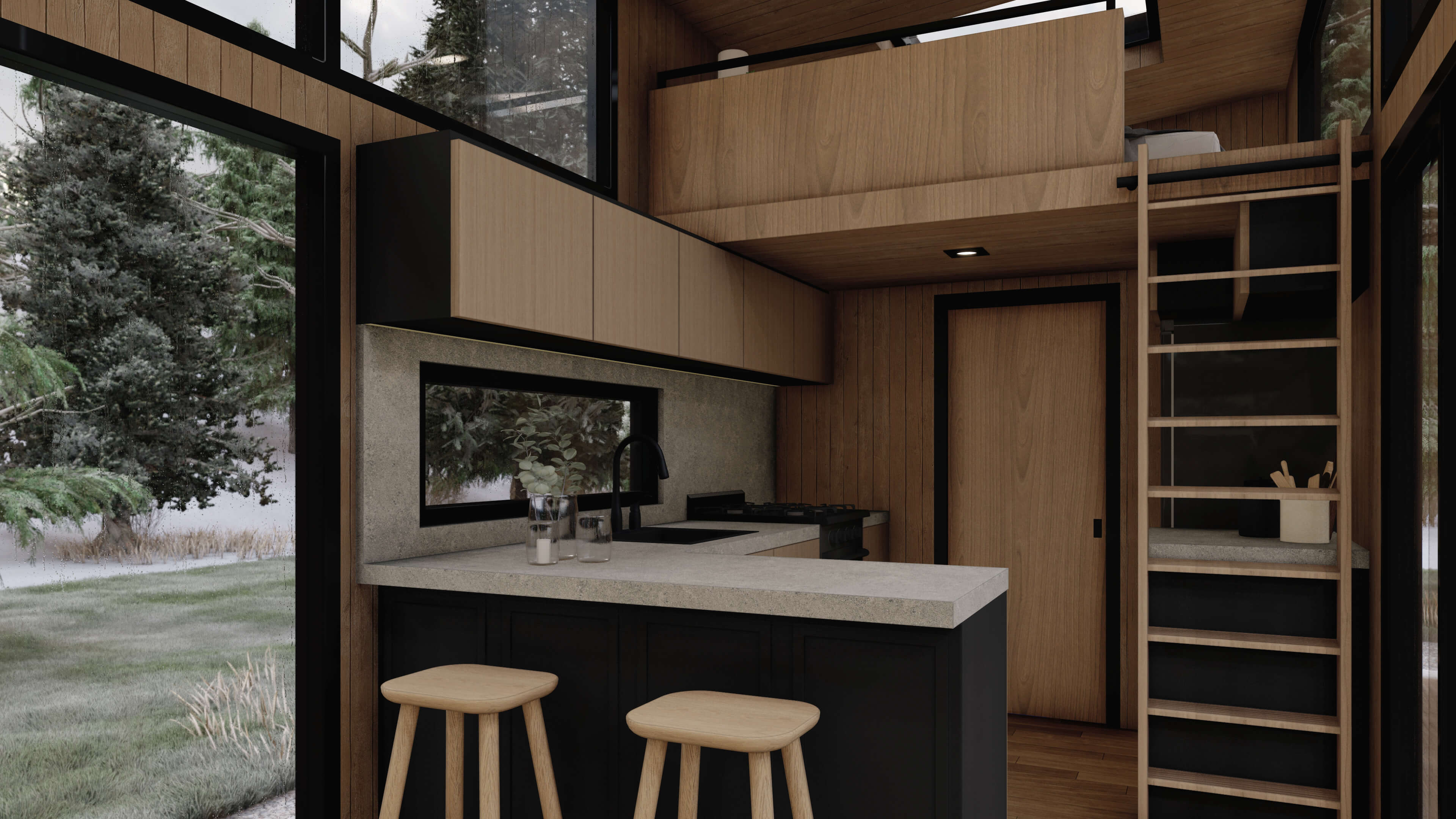
You can’t treat tiny-house cabinets like scaled-down kitchen boxes; you’ve got to design them as safe, space-optimized systems. Start by measuring walls, windows, and clearances so doors, stairs, and exits stay code-friendly and easy to use.
Then stack storage vertically with tall uppers, add toe-kick and stair-step drawers, and upgrade corners with pull-outs. The real gains come when you choose the right zones and hardware…
Key Takeaways
-
Use shallow upper cabinets, tall pull-out pantries, and toe-kick drawers to maximize storage without crowding narrow aisles.
-
Install full-extension slides, vertical dividers, and swing-up doors to access items easily in tight spaces.
-
Add travel latches on every door and drawer to prevent spills and damage when the tiny house moves.
-
Anchor cabinets into studs or structural blocking with screws and adhesive for strength under vibration and road forces.
-
Choose lightweight, moisture-resistant plywood with durable finishes to reduce load, resist humidity, and simplify cleaning.
Start With the Best Tiny House Cabinet Ideas
If you start with cabinet ideas that respect clearances, weight, and fastening requirements, you’ll build tiny house storage that feels spacious and stays safe on the road.
Prioritize shallow uppers, tall pullouts, and toe-kick drawers so you reach items without overbending or climbing. Use space saving techniques like full-extension slides, vertical dividers, and swing-up doors that won’t block egress paths. Keep doors and drawers latched for travel, and fasten boxes into studs or structural blocking with appropriate screws and metal brackets.
Choose lightweight plywood, not particleboard, to control load and moisture risk. Add rounded pulls and soft-close hardware to reduce injury and rattle. With custom cabinetry, you’ll match odd wall angles and maximize every cubic inch.

Plan Cabinets by Zone (Kitchen, Bath, Loft, Entry)
Strong cabinet ideas matter most when you assign them to the way you actually live, so plan storage by zone: kitchen, bath, loft, and entry.
In the kitchen, put everyday cookware and pantry pull-outs near the prep surface for tight kitchen organization, and keep heavy items low to reduce strain. In the bath, use shallow, latching cabinets for bath essentials, keep medications secured, and prioritize moisture-resistant materials and vented toe-kicks.
For the loft, choose low-profile, built-in cubbies and drawers you can reach from the ladder or stair landing to improve loft accessibility without blocking egress. At the entry, dedicate a slim cabinet for shoes, hooks, and a drop zone for keys to boost entry convenience, while maintaining clear, code-friendly paths.
Measure Walls, Windows, and Clearances First
Before you sketch a single cabinet box, measure every wall run, corner, and ceiling height, then locate windows, doors, outlets, and plumbing so your layout stays buildable and code-friendly.
Confirm your wall measurements at multiple points; tiny houses aren’t perfectly square, and a 1/4-inch taper can ruin door reveals and filler strips. Map stud locations for safe fastening and keep electrical access panels unobstructed.
Use clearance considerations to protect daily movement: maintain comfortable aisle widths, allow door and drawer swing without hitting appliances, and keep egress windows clear. Check countertop height and toe-kick depth for ergonomic stance, and verify required clearances around the cooktop and sink to reduce hazards. Finally, mark vent routes and shutoff valves so service stays simple.
Maximize Wall Height With Tall Uppers
Because tiny houses rarely waste a vertical inch, you’ll get the most functional storage by running upper cabinets as tall as the wall and ceiling allow.
Choose full-height boxes with a slim top section for rarely used items, and place daily dishes within comfortable reach to reduce shoulder strain. Keep door swing clear of lighting, vents, and window trim, and anchor cabinets into studs with rated fasteners to meet load and safety expectations. Maintain required clearances above cooking surfaces and don’t block egress windows or electrical access panels.
Add small crown gaps or filler strips so units sit plumb on uneven walls. When cabinets can’t reach the lid, add sealed ceiling shelves to extend vertical storage without crowding countertops.

Add Toe-Kick and Stair-Step Drawers
Tall uppers handle the vertical lift, so you can squeeze more storage out of the floor line by adding toe-kick and stair-step drawers.
Specify full-extension slides and low-profile pulls so you can open them with a tap of your toe or a knuckle, keeping hands free during prep. Keep the toe space at code-friendly depth and height, then treat it as toe kick storage for flat items like trays, pet bowls, or cleaning cloths.
Under your loft stairs, build shallow drawers behind each riser for stair step organization: shoes, tools, cords, and seasonal linens. Use positive latches for travel, edge-banded fronts for durability, and soft-close hardware to reduce noise. Label contents so you won’t overpack.
Upgrade Corners With Pull-Outs and Lazy Susans
Even if your tiny-house layout forces tight L-shaped runs, you can reclaim the dead corner by swapping fixed shelves for corner pull-outs or a lazy susan that brings items to you. These systems turn awkward voids into usable corner storage without changing your cabinet footprint.
Choose full-extension, soft-close pull-outs so you don’t twist your back reaching past door hinges. For lazy susans, pick D-shaped or kidney trays with raised rims; rotating shelves keep jars and spices from tipping while you roll.
Mount hardware to rated side panels, follow manufacturer clearances, and keep doors from blocking egress paths. Add non-slip liners, label zones, and place heavy cookware low to maintain safe, stable access.
Build Cabinets Into Benches, Beds, and Islands
When you build cabinets into benches, beds, and islands, you turn “furniture” into code-smart storage without stealing aisle width. Keep clearances where you walk and cook, and let storage live under seated and sleeping zones instead of on walls.
With bench storage, hinge lids or add front access so you don’t lift cushions in tight spaces.

Specify bed drawers that pull from the foot or aisle side, so you can open them without moving ladders or blocking egress. Add positive latches to prevent roll-out while towing.
For island cabinets, size the overhang for knees, keep the work edge reachable, and route outlets and plumbing through protected chases. This multifunctional furniture keeps pathways clear and daily tasks comfortable.
Choose Hardware, Materials, and Finishes That Last
Because a tiny house bounces, flexes, and sees humid swings, you can’t treat cabinet parts like they’re sitting in a fixed condo.
Choose cabinet boxes in baltic birch plywood or quality MDF with sealed edges; skip particleboard where leaks or condensation can occur. Use screws plus construction adhesive, and add corner blocks so joints don’t rack on the road.
For doors and drawers, install functional hardware: full-extension, ball-bearing slides with positive stops, and soft-close hinges rated for high cycles. Add travel latches so everything stays shut. Keep clearances code-compliant around egress paths and appliances, and pick low-profile pulls that won’t snag hips.
Finish with durable finishes—conversion varnish, catalyzed lacquer, or marine-grade polyurethane—so surfaces resist water, heat, and cleaning chemicals.
Conclusion
You’ll get the most from cabinets for a tiny house when you plan by zone, measure every clearance, and build up the walls with tall uppers.
Add toe-kick and stair-step drawers to capture dead space, and upgrade corners with pull-outs or Lazy Susans for safe reach. Integrate storage into benches, beds, and islands to keep walkways code-clear.
Choose full-extension slides, swing-up doors, and moisture-resistant, lightweight materials so everything stays durable and accessible.
Share: