
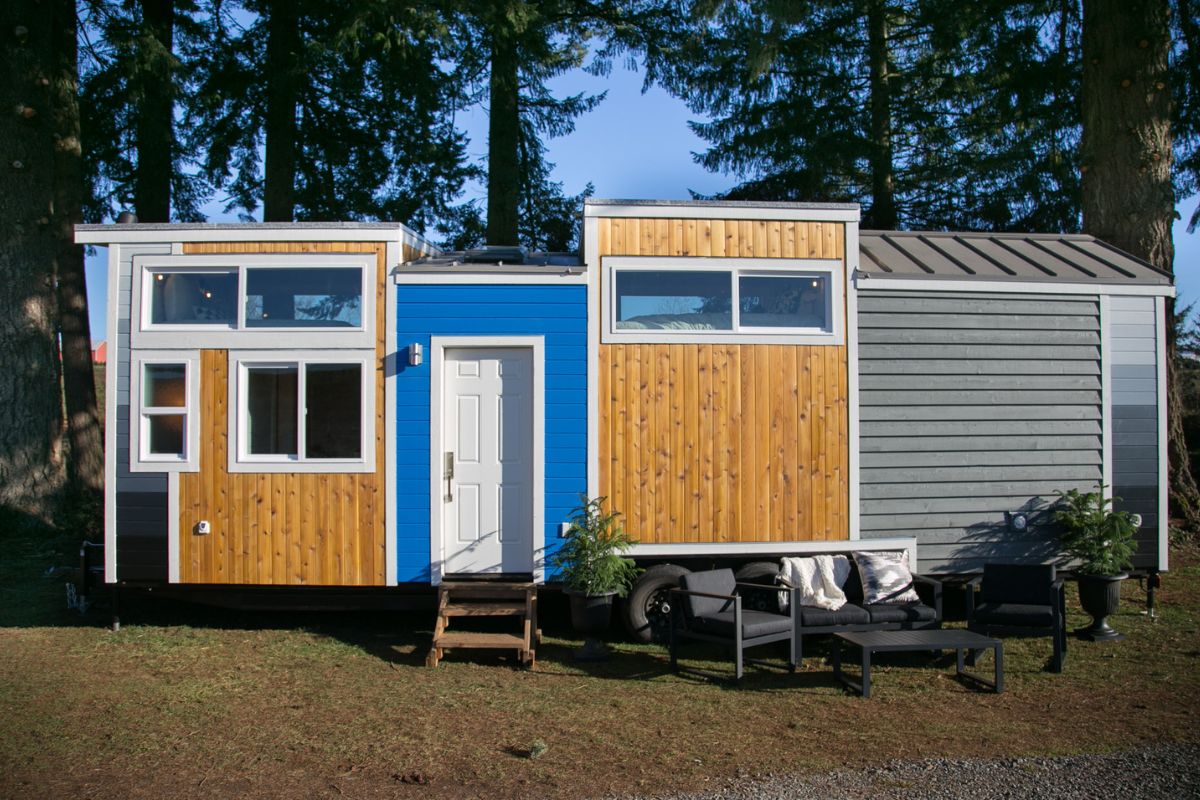
You can’t buy a tiny house like a standard home, so you’ll start by classifying it: THOW (RV-style) or foundation (ADU/small home).
You’ll then validate zoning, parking, and utility rules before you commit to a budget that includes permits, hookups, and transport. Next, you’ll map your floor plan to daily workflows, then choose buy vs build and line up financing and insurance that match the legal class—because one mismatch can stop the deal cold…
Key Takeaways
-
Choose tiny-on-wheels for mobility or a fixed foundation for stability, utilities, and heavier finishes.
-
Verify zoning, minimum size, ADU rules, and whether it must meet IRC Appendix Q, RVIA, HUD, or modular codes.
-
For wheeled builds, confirm trailer GVWR/axles/brakes and model total weight with a 15% safety margin.
-
Build a line-item budget covering shell, systems, permits, transport, and a contingency, and set a realistic design-to-inspection timeline.
-
Match financing and insurance to legal classification, confirming down payments, replacement-cost coverage, and whether transport and full-time use are included.
Pick a Tiny House Type: Wheels or Foundation
If you treat the tiny house type as a core design constraint, you’ll make every downstream decision faster. Start by choosing wheels for mobile living or a fixed build for stability.
On wheels, you’re basically buying a road-legal chassis: check GVWR, axle rating, hitch class, tire spec, and braking. Model your load like code: trailer capacity - (shell + systems + water + gear) ≥ 15% margin. Plan utilities as quick-connect modules and keep dimensions within typical tow limits.
For foundation options, you’ll spec site-built footings, piers, or a slab, then size beams, anchoring, and insulation for permanent loads. You can run hard-plumbed water, larger tanks, and heavier finishes because you’re not towing.

Find Where a Tiny House Can Legally Go
Before you buy anything, map your tiny house to a legal address, not just a floor plan. Start by pulling the parcel’s zoning map and reading the ordinance for minimum dwelling size, ADU rules, RV/tiny-on-wheels classification, setbacks, and permitted utilities.
Verify whether the jurisdiction adopts IRC Appendix Q or requires state modular, HUD, or RVIA certification. Then run a compliance checklist: driveway/fire access, water source approval, septic perc or sewer tie-in, and electrical service requirements.
If you’ll park on someone else’s property, treat land leases like code: confirm duration, eviction terms, utility metering, and explicit tiny-house permission in writing. Call planning, ask for written interpretation, and log names, dates, and case numbers for traceability.
Set Your Tiny House Budget and Timeline
Two constraints drive every tiny-house purchase: cash flow and schedule. Build a line-item budget in a spreadsheet: `base shell + utilities + trailer/foundation + permits + transport + hookups + insurance + contingency(10–20%)`.
Convert quotes into monthly burn: `total_cost / months_to_ready`. If that burn exceeds net income minus fixed expenses, downscope or delay. Apply budgeting tips: lock allowances per category, track change orders, and treat DIY labor as a priced line item so you don’t hide risk.
For timeline planning, draft a Gantt-style list: design/engineering, permitting, procurement lead times, build, inspections, delivery, site setup, utilities activation. Add buffers for weather and inspection rework, and set decision deadlines to prevent schedule slip.

Choose a Tiny House Floor Plan for Daily Life
Because a tiny house compresses every routine into a few square meters, you should pick a floor plan by modeling your day, not by chasing aesthetics. Write your workflow like pseudocode: `wake -> toilet -> coffee -> work -> cook -> sleep`. Measure each step’s clearance (door swing, aisle width, loft ladder angle) and map it to zones. Prioritize a straight “traffic spine” so you don’t dead-end around the bed or kitchen.
Apply space optimization strategies: stack functions vertically, keep wet areas adjacent, and align plumbing on one wall to reduce runs. Specify multi functional furniture with real dimensions: a bench that stores batteries, a table that flips to a desk, and stairs that double as drawers. Validate the plan with tape on the floor, then iterate.
Decide to Buy vs Build Your Tiny House
Once you’ve locked your floor plan, decide whether you’ll buy a finished tiny house, build from a kit, or DIY from a trailer up, and treat it like a trade-study with constraints. Define inputs: budget, timeline, tools, skill level, and inspection tolerance. List buying options: turnkey builder, used unit, shell-only, kit, or plans-only.
Evaluate pros and cons against code checks: trailer GVWR, axle rating, load paths, shear walls, egress windows, stair/loft geometry, smoke/CO placement, and electrical ampacity. Buying reduces schedule risk and rework, but you’ll accept fixed specs and transport limits. Kits standardize materials and docs, but you still manage assembly and QC. DIY maximizes customization and cost control, but it raises permitting, inspection, and build-quality risk. Write a decision matrix and commit.
Compare Tiny House Financing and Insurance
Before you sign a contract, map your tiny house to a finance-and-insurance category, since lenders and carriers price risk by legal status: RV/park model, manufactured home, or site-built ADU/house. That label drives underwriting inputs: VIN/title for RV, HUD data plate/serial for manufactured, or parcel-based appraisal for site-built.

Compare financing options by matching term length, collateral type, and rate basis: RV loans (shorter terms, higher APR), chattel loans (unit-only security interest), or conventional/HELOC (requires real property + permits). Budget for down payment, origination, and escrow requirements.
Then shortlist insurance providers that actually cover your category and usage (full-time, mobile, rental). Verify liability limits, replacement cost valuation, wind/hail exclusions, and whether tow/transport coverage is bundled or separate.
Inspect, Negotiate, and Close the Deal
Run a pre-close checklist and treat the tiny house like a constrained system you’re validating under load: hire an inspector who understands your build category (RV/park model, manufactured, or site-built) and have them test the critical paths—roof and flashing, moisture intrusion, electrical (panel, GFCI/AFCI, load), plumbing (pressure/leaks, freeze protection), HVAC/ventilation, framing/trailer integrity, and documentation (VIN/title or HUD data plate, permits, and build specs).
Use the home inspection report to map defects to code or manufacturer standards, then quantify repair scope, timelines, and liability. Drive price negotiation with written estimates and a punch-list escrow, not opinions.
Confirm siting compliance: zoning, setbacks, tie-downs, utility hookups, and egress/smoke/CO rules. Close only after title/registration clears, liens release, final walk-through matches the punch list, and you receive manuals, warranties, and as-builts.
Conclusion
You’re ready to buy a tiny house by treating it like a scoped project. Choose wheels vs foundation, then validate zoning/parking as a hard requirement. Build a budget that includes shell, utilities, permits, and contingency, and lock a realistic timeline. Pick a floor plan that matches your daily workflows.
Decide build vs buy based on tools, labor, and risk. Align financing and insurance with classification. Inspect, negotiate, and close with documented specs.


Share: