

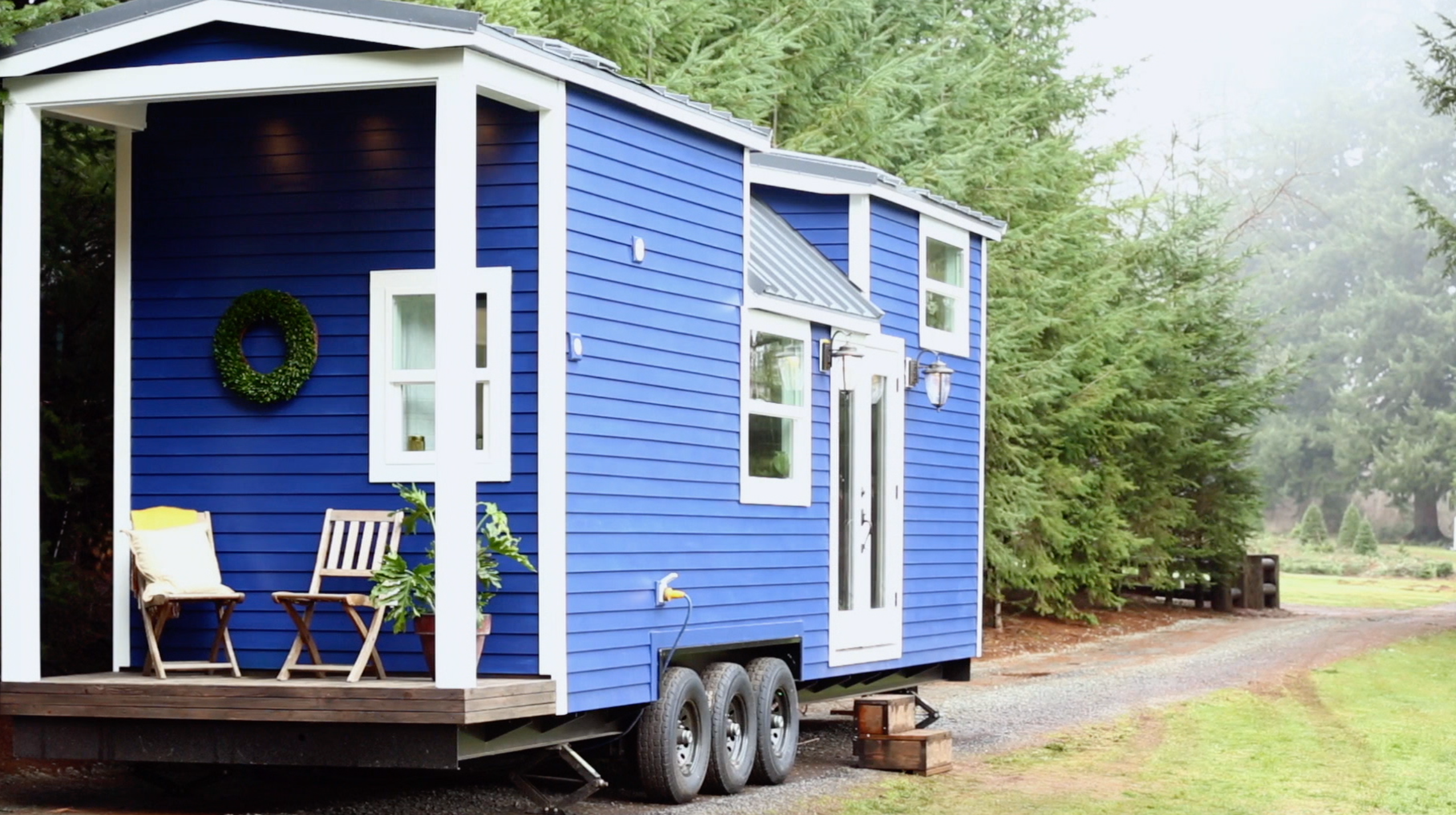
You’ll usually call it a tiny house when you’re working within about 100–400 sq ft, often constrained by road-legal towing limits. You’ll see widths around 8'0"–8'6", lengths from roughly 16–28 ft, and heights managed to clear bridges and local codes.
At 100 sq ft you’re in a single-path layout; by 200–400 sq ft you can separate zones, add storage, and fit real wet areas—but the tradeoffs start fast.
Key Takeaways
-
Tiny houses typically measure 100–400 sq ft, with livability and storage improving noticeably as you approach 300–400 sq ft.
-
“Tiny” is defined by total floor area plus legal transport limits for houses on wheels and local zoning/minimum size rules on foundations.
-
Most tiny houses are 8'0"–8'6" wide, 16–28 ft long (often 20–24 ft), and 12'–13'6" tall to meet road clearances.
-
Layouts scale from one-zone “capsule” plans at ~100 sq ft to distinct sleeping and functional zones around 200–300 sq ft.
-
Kitchens and baths fit via compact fixtures: 24-inch range, undercounter fridge, small sink, and a 32x32-inch shower with space-saving storage.
What Size Counts as a Tiny House?
Two numbers usually define a tiny house: total floor area and legal transport width. For tiny house definitions, you typically stay well below conventional dwelling sizes and prioritize a compact, code-manageable footprint.
If you build on wheels, you’ll design around road limits: overall width commonly must fit trailer rules, and height/length must clear bridges, turns, and parking. If you build on a foundation, local zoning and minimum-dwelling requirements set the threshold, sometimes via maximum area caps, sometimes via “accessory” status.
You’ll also count lofts carefully: jurisdictions may exclude low-ceiling loft area or require it to meet habitable-room criteria. Hit the limit, and you lose the permitting simplicity that enables space efficiency.

How Big Are Common Tiny House Sizes (100–400 Sq Ft)?
Most tiny houses land in the 100–400 sq ft range, and each 100‑sq‑ft step changes what you can fit, how you circulate, and how you meet code.
At ~100 sq ft, you’re in micro-shelter territory: single-zone living, minimal storage, and tight clearances, so space efficiency depends on fold-down surfaces and built-ins. Around 200 sq ft, you can separate functions: a defined kitchen line, a wet bath, and a loft or Murphy bed, improving privacy and egress planning.
At ~300 sq ft, you can add a distinct sleeping area, more full-height storage, and a clearer living-dining workflow. Near 400 sq ft, design trends favor open plans with a real sofa, larger appliances, and accessible layouts.
How Wide, Long, and Tall Is a Tiny House?
Square footage tells you how much program you can fit, but the footprint and height tell you whether it’ll move legally, clear bridges, and feel livable.
Most towable tiny house dimensions center on 8'0"–8'6" exterior width to meet road limits; go wider and you’ll need permits and route planning. Length typically runs 16–28 feet, with 20–24 feet common because it balances trailer ratings, turning radius, and parking constraints.
Overall height from road to roof peak usually lands around 12'–13'6"; stay under 13'6" to clear most overpasses and utility lines. Use roof pitch, insulation thickness, and mechanical chases as space optimization levers without increasing height or width. Check axle spacing and tongue length too.

Tiny House Layouts by Size (100, 200, 300, 400 Sq Ft)
Four size bands—100, 200, 300, and 400 sq ft—drive entirely different layout decisions because every added foot changes circulation, storage depth, and whether you can separate “wet” functions from “dry” living space.
At ~100 sq ft, you’ll design a single-path “capsule”: one multipurpose zone, vertical storage, and transformable furniture to keep a 24–30-inch circulation lane. Around 200 sq ft, you can introduce a defined sleep loft or alcove and a clearer entry/mud zone, improving tiny house zoning for coats, gear, and utilities.
At 300 sq ft, you’ll likely support a ground-floor bedroom nook and dedicate wall runs for built-ins, creating quieter work/living separation. Near 400 sq ft, you can add a short hall, two distinct rooms, and fuller tiny house amenities without compromising clearances.
What Fits in a Tiny House Kitchen and Bathroom?
Two rooms dictate whether a tiny house feels workable day to day: the kitchen and the bathroom.
In a tight galley, you can fit kitchen essentials by stacking functions: a 24-inch range or two-burner cooktop, undercounter fridge (3–7 cu ft), single-bowl sink, and 18-inch dishwasher or pull-out trash. Use 12–18 inches of continuous counter, plus a flip-up extension. Put pans in toe-kick drawers and add a rail system for utensils and spices.
For the bath, you can fit a 32x32-inch shower, compact toilet (or composting unit), and 18–24-inch vanity with a medicine cabinet. Maximize bathroom storage with recessed niches, over-toilet shelving, and a pocket door to protect clearance. Add hooks, towel bars, and a ventilated hamper slot.

How to Choose the Right Tiny House Size (Full-Time, Towing, Zoning)
Once you’ve proven the kitchen and bath can work on paper, you still need a footprint that matches how you’ll live, how you’ll move it, and what your jurisdiction allows. For full time living, start with sleep strategy: fixed bed needs 70–90 sq ft; a loft saves floor area but adds stair/ladder clearance. Size storage by inventory: 12–18 linear ft of closets/cabs per adult prevents overflow.
If towing, cap length to your tow rating and route limits; many stay near 20–24 ft to keep GVWR manageable, axle loading balanced, and turning radius sane. Then verify zoning regulations: minimum dwelling size, ADU rules, setbacks, height caps, and whether THOWs count as RVs. Permit utilities early.
Conclusion
You’ve seen that a tiny house typically lands between 100–400 sq ft, with road-legal widths around 8'0"–8'6" and lengths roughly 16–28 ft.
As square footage increases, you’ll shift from single-path circulation to defined sleeping zones, then to partial rooms and more storage. You can still fit a functional kitchen and bath by prioritizing compact fixtures. Choose size based on full-time needs, tow limits, and zoning.


Share: