

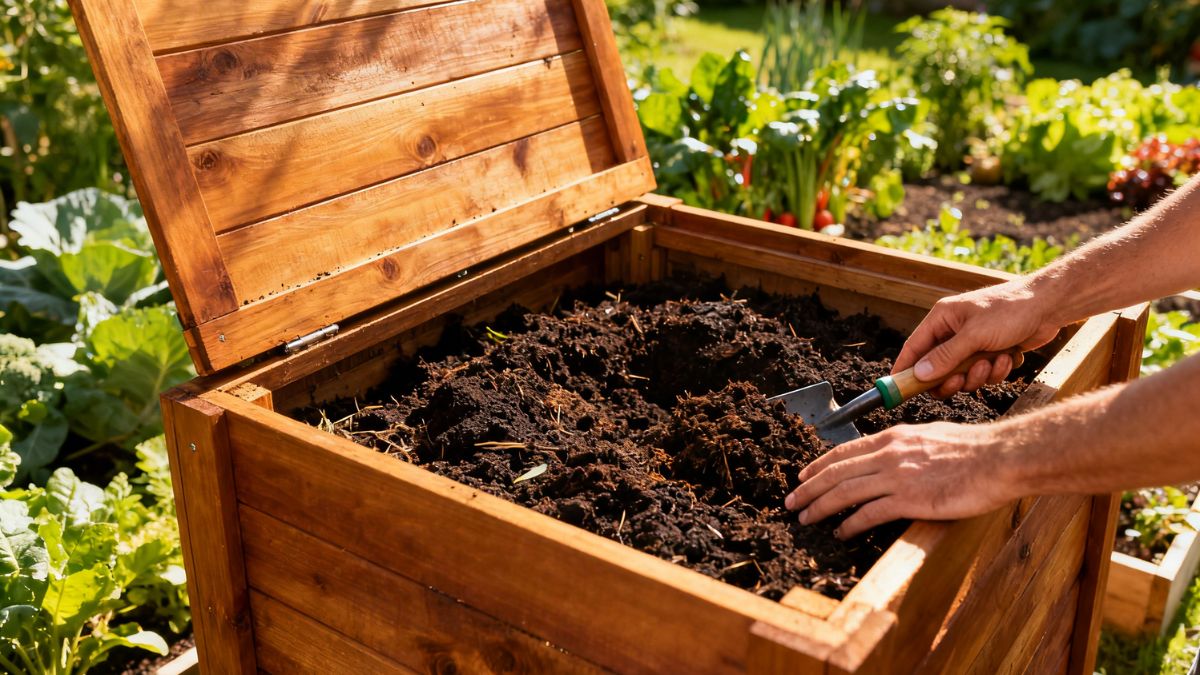
If you live in a tiny home, you can compost without giving up counter space or dealing with smells. You’ll get the best results by matching your setup to your waste: worms for fruit and veg scraps, bokashi for leftovers that include meat or dairy, or a compact aerobic bin for mixed materials.
Start with a sealed scrap container and a simple greens-to-browns balance, and you’ll avoid pests—then the real question is which method fits your daily routine.
Key Takeaways
-
Choose a tiny-home method: bokashi for fastest indoor processing, vermicomposting for true compost, or a compact aerobic bin for traditional results.
-
Use a sealed countertop scrap bin with a gasketed lid, empty every 1–3 days, and wash weekly to prevent odors.
-
Compost mostly fruit/veg scraps, coffee, and tea; balance with browns like shredded cardboard or uncoated paper for faster, cleaner breakdown.
-
Avoid pet waste, diseased plants, glossy or plastic-lined packaging; limit meat, dairy, and oily foods unless using bokashi fermentation.
-
For worm bins, keep bedding like a wrung-out sponge, bury chopped scraps to deter flies, and harvest castings every 2–3 months.
Choose a Tiny-Home Composting Method (Quick Comparison)
In a tiny home, you’ve got three main composting routes to choose from—vermicomposting (worms), bokashi fermentation, or a compact aerobic bin—and the best fit depends on how much food waste you generate, how much odor risk you can tolerate, and whether you need finished compost on-site or can finish it elsewhere.
If you want fastest setup indoors, pick bokashi: it’s sealed, low-odor, and handles daily scraps, but you’ll still need a second step to finish. If you want true compost indoors with minimal power, go vermicomposting; keep bedding balanced and you’ll get steady output, though it’s sensitive to temperature swings.
If you’ve got a porch or shed, a small aerobic bin gives traditional results; you’ll need airflow and occasional mixing. Compare composting systems by maintenance minutes per week and space efficiency per square foot.
Start Indoor Worm Composting in a Tiny Home
Once you’ve got kitchen scraps contained and odor-free in a sealed bin, you can turn them into compost indoors with vermicomposting (worms) without giving up precious floor space. Choose a compact, lidded bin that fits under a sink or in a closet, and drill small air holes. Add moistened shredded cardboard, then red wigglers.

Feed small amounts of chopped produce scraps and coffee grounds, burying food to prevent fruit flies. For indoor worm care, keep bedding like a wrung-out sponge, hold temperatures around 55–77°F, and avoid overfeeding; worms regulate best with steady, low inputs. Rotate feeding zones to prevent hotspots.
Worm bin benefits include faster processing than passive bins and nutrient-rich castings for houseplants. Harvest castings every 2–3 months with a simple side-to-side method.
Know What You Can Compost in a Tiny Home
Most tiny-home compost problems come down to a simple rule: compost what breaks down cleanly and predictably, and keep anything that attracts pests, turns rancid, or overwhelms your system out.
Start with low-odor, fast compostable materials: fruit and vegetable peels, coffee grounds and filters, tea leaves (bag removed if synthetic), crushed eggshells, and small amounts of plain grains.
Balance your kitchen scraps with “browns” to prevent wet, smelly piles: shredded cardboard, uncoated paper, dried leaves, sawdust, or coconut coir. Skip meat, fish, dairy, oily foods, and greasy paper—they rot anaerobically and invite insects.
Avoid pet waste, diseased plants, and glossy or plastic-lined packaging. If you’re unsure, test a small portion and watch for odor or pests.
Use a Sealed Countertop Scrap Bin (No Odors)
Something as simple as a sealed countertop scrap bin can eliminate odors before they start, which matters when your kitchen and living space share the same air.
Choose a small, easy-open model with a gasketed lid; airtight seals slow odor-causing microbial activity and keep fruit flies out. For better odor management, line the bin with a paper bag or compostable liner, or drop in a folded sheet of newspaper to absorb moisture. Keep scraps drier by draining tea bags and rinsing cans before adding.
Store the bin away from heat, and empty it every 1–3 days, especially after adding onion peels or citrus rinds. Wash weekly with hot soapy water and a quick vinegar wipe. Sealed containers make tiny-home composting manageable.
Use Bokashi Composting for Meat and Dairy
If your small-space composting stalls because you cook with meat, fish, cheese, or oily leftovers, bokashi gives you a clean way to handle them indoors. You’ll use an airtight bucket and sprinkle bran inoculated with beneficial microbes over each layer of scraps, then press it down to remove air.

This Fermentation process pickles food quickly, so it doesn’t rot, which supports strong Odor control in tight quarters. One of the key Bokashi benefits is speed: in about 2 weeks, you’ll get a fermented pre-compost.
Bury that material in a small soil bin or add it to a larger outdoor pile to finish breaking down into Nutrient rich compost. Drain the leachate regularly and dilute it for plants, following label ratios.
Keep Tiny-Home Composting Clean and Pest-Free
Because pests and smells escalate fast in a tiny home, you’ll keep composting clean by controlling three things: food exposure, moisture, and access.
Keep scraps in a lidded countertop caddy and empty it daily into a sealed bin. Always bury fresh food under 2–3 inches of browns (shredded paper, leaves, coir) to cut odor and fruit flies. Keep moisture like a wrung-out sponge; if it’s wet, add browns and mix with a small trowel.
If it’s dry, mist lightly. For pest prevention, use tight gaskets, fine vents, and store extra browns in a closed bag. Rinse composting tools right after use, wipe spills, and freeze especially smelly scraps until drop-in day.
Conclusion
You can compost in a tiny home without smells, mess, or lost space by picking a method that fits your routine. Use a sealed countertop bin to control odors, then move scraps to worms, bokashi, or a compact aerobic container.
Stick to what each system handles, and balance “greens” with “browns” to keep it stable. Clean containers regularly, block pests, and you’ll cut landfill waste while making usable soil.


Share: