

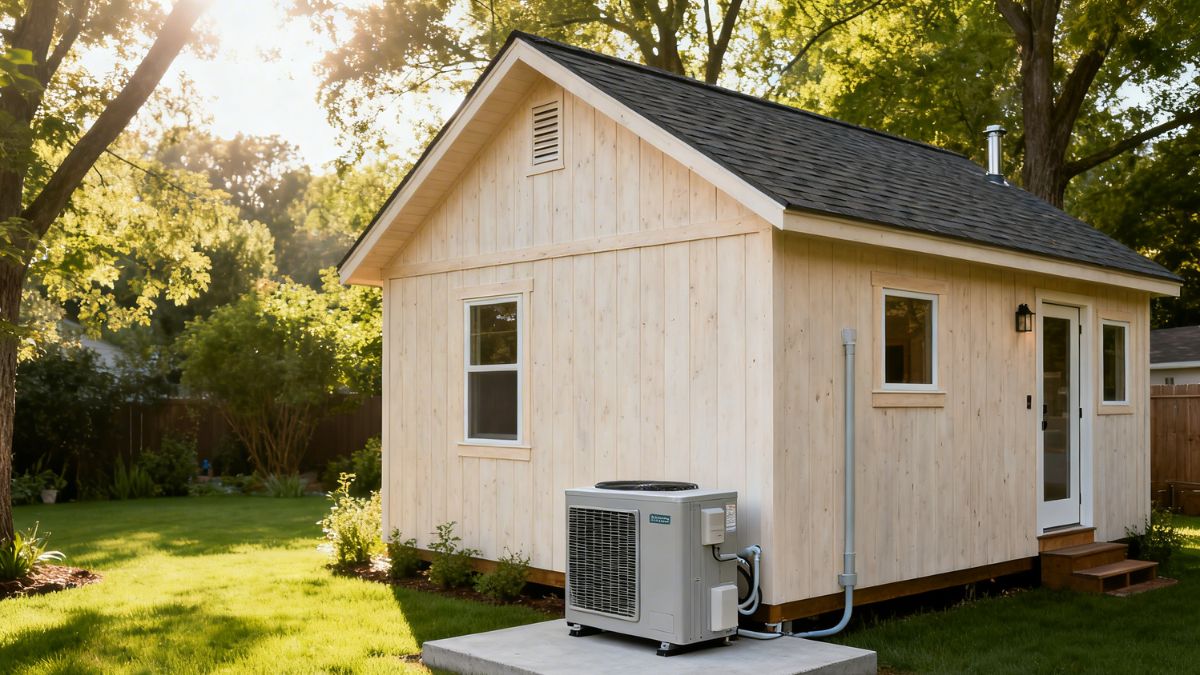
Tiny homes demand precision. Not a square foot goes to waste. Heating and cooling systems should be given the same level of consideration. Even a tiny design mistake can cause major comfort problems, especially in rooms with limited space.
Tiny homes do great with heat pumps. They heat and cool. They operate efficiently. They fit compact spaces. However, the performance relies mainly on the proper system implementation.
Here are several reasons why design is crucial when incorporating a heat pump into the construction of your tiny home.
Small Spaces Magnify System Mistakes
In a typical house, a lack of airflow or an incorrect size may not be noticeable. In a tiny home, those problems are exacerbated.
An oversized heat pump will also short-cycle. Short cycling causes:
-
Inconsistent temperatures
-
Poor humidity control
-
Increased wear on components
-
Higher energy consumption
It will run continuously if the system is too small. Constant load means more strain and a shorter lifespan.
As tiny homes have little air volume, there is little room for error. Proper fit contributes to solid drivability and substantial long-term reliability.

Load Calculations Must Be Precise
It all starts with proper design and load calculations. Size is not dependent solely on square footage.
Designers must consider:
-
Insulation levels
-
Window size and placement
-
Ceiling height
-
Air leakage
-
Local climate conditions
-
Occupancy levels
In tiny homes, windows are typically larger to let in more natural light. Large areas of glass can subject the building to excessive heat gain and heat loss. Without deflating this, the system could run inefficiently.
An accurate load calculation will size the heat pump to meet actual heating and cooling needs.
Airflow Planning Is Critical
Comfort is all about the airflow design. In a tight configuration, airflow must be consistent.
Poor airflow design can create:
-
Hot upper loft areas
-
Cold floor zones
-
Stale air pockets
-
Drafts near vents
Heat rises. Many small homes have sleeping lofts. If the system does not distribute air well, however, the loft can be too warm in summer.
Supply vents and return pathways are correctly placed to achieve a good balance of temperatures in the room.
Ducted vs. Ductless Considerations
Ductless mini-split systems are commonly used in many tiny homes. They are ideal for small spaces, as they require no bulky ductwork.
However, ductless design still requires planning.
Indoor unit placement must:
-
Avoid blowing air directly onto seating or sleeping areas
-
Allow unobstructed airflow
-
Support even temperature distribution
In certain compact tiny homes, space-saving ducted units are an option. In such scenarios, utmost care must be taken with the size and routing of ducts to ensure no restriction on the flow.
It is just that every arrangement requires a personalized approach according to the construction plan and space at hand.

Humidity Control in Tight Spaces
Tiny homes are commonly built to a high level of air sealing and insulation. Though this enhances efficiency, it lowers the airflow rate for natural ventilation.
There may be concern about moisture buildup. It becomes humid from cooking, showers, and breathing in a small cubic air volume.
If a heat pump is too large, it cools the space fast but doesn’t remove enough humidity. The room, however, then has a moist feel.
A correctly sized system allows for longer run times. Extend the cycle and more humidity will be removed, providing enhanced comfort.
Design should address both thermal and moisture control.
Electrical Capacity Must Be Evaluated
Some tiny homes have only limited electrical service. Others are wired into the grid like typical residential power. The rest depend on generators or solar systems.
The available electrical capacity should be considered in heat pump design.
An improperly selected system may:
-
Overload the electrical panel
-
Trip breakers
-
Exceed off-grid power supply limits
Inverter technology is commonly used in high-efficiency heat pumps. These systems can ramp power usage up or down in response to demand. This helps you to minimize peak electricity consumption.
The system must be sized to the power source to avoid dissatisfaction with performance.
Insulation and Envelope Design Work Together With the Heat Pump
The insulation is integrated with the structure and becomes part of the HVAC system.
High-insulation performance means less heating or cooling is needed. Air sealing prevents unwanted drafts. The right selection of windows prevents heat exchange.
If your home is well insulated from the elements thanks to a well-designed envelope, a smaller heat pump might be all you need. This results in decreased energy consumption and reduced equipment costs.
With poor insulation, even a properly sized heat pump will struggle.
Builders and HVAC contractors collaborate on the design to maintain balanced performance.
Ventilation Must Be Addressed
Mechanical ventilation is typically needed because tiny homes are designed to be airtight.
Fresh air systems improve indoor air quality. If you don't have proper ventilation planning in place, stagnant air and humidity could build up.
Design may include:
-
Energy recovery ventilators (ERVs)
-
Dedicated exhaust fans
-
Timed ventilation systems
Heat pump operation is enhanced when ventilation interacts effectively with the airflow design.
Long-Term Efficiency Depends on Installation Quality

Even the highest-quality gear won't work if it isn't installed correctly.
A good refrigerant charge, tight electrical connections, proper airflow adjustment, and secure mounting also contribute to system operation.
Tiny houses must have lines and wiring run methodically. There is very little room for error in these confined wall and ceiling cavities.
Professionally installed to protect efficiency and system life.
Comfort Expectations Should Guide Design
Living in a tiny home is all about simplicity and efficiency. Heating and cooling systems should also support those goals.
A properly designed heat pump system provides:
-
Even temperatures
-
Quiet operation
-
Stable humidity levels
-
Reliable performance year-round
Each of these results can, in principle, be affected by design.
Skipping detailed planning may save time upfront but can create long-term discomfort.
Conclusion
Small houses are also prime candidates for carefully thought-out HVAC design. With limited real estate inside, tight construction, and restrictions on electrical and airflow, precision is required.
Heat pumps are an excellent solution for tiny homes. Performance is, of course, subject to possible caveats regarding size accuracy, airflow design strategy, humidity control, and the all-important quality of installation.
A brand-new unit, born and built for the structure, constant comfort, and a long life.
If you’re constructing (or renovating) a tiny home and want to make sure your heat pump system is designed correctly from the beginning, book a consultation with one of our experienced professionals here at Reliable Heating and Air to review your layout, load, specs, and installation plan.



Share: