


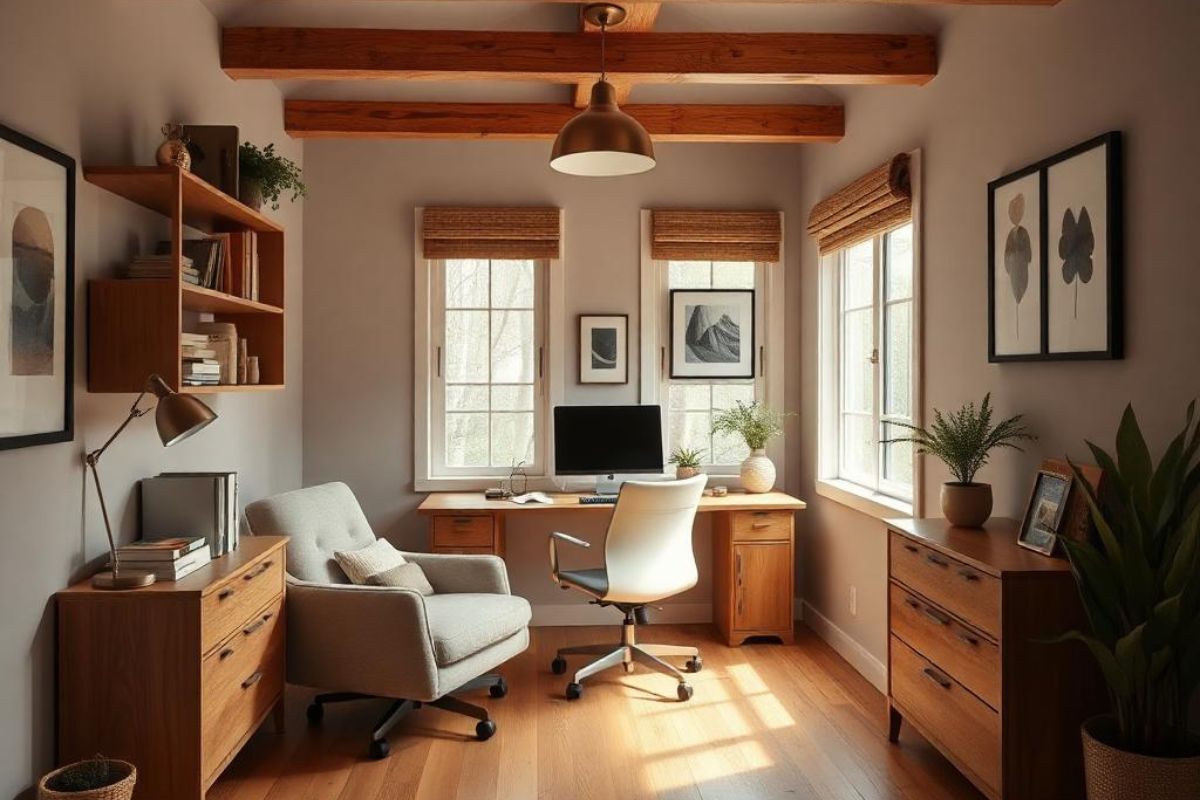
Tiny-house layouts force honest decisions about comfort. A workstation cannot be treated like an optional corner that only matters on “office days.” It usually shares square footage with dining, storage, and circulation.
That makes desk height more than a preference. When a surface sits too low, shoulders round forward during laptop work, and the space starts to feel tighter than it really is. If the surface is also too high, the wrists and neck will bear the brunt as it involves carrying out detail work like sketching, packaging, and planning. A height-adjustable solution eliminates such daily frictions by effectively using just one table to carry out different routines.
Electric lifting columns sit behind that flexibility. They provide guided vertical travel that looks tidy in a compact interior, and they help a multi-use zone switch roles quickly while keeping the room visually calm.
Why Height Adjustment Works Better Than “One Perfect Desk Height”

In a larger home, a desk can be built around a single posture and left alone. In a tiny house, the same surface often moves between typing, writing, craft work, and light assembly.
Each activity wants a different elbow angle and a different sightline. That is why “standard desk height” can feel like a compromise that never fully fits. Height adjustment also helps shared living. Two people of different heights can share the same workstation without having to stack any cushions or change seats.
Guests can work over a weekend without any sign of changing. Even short standing sessions can be useful when the day includes repetitive chores, because switching posture can make the space feel less confining. The best part is that a single zone can stay organized. Instead of building separate surfaces for separate tasks, one workstation can adapt and then return to a neutral position that keeps the room open.
Choosing Columns That Fit Tiny Interiors Without Making the Build Heavy
As any small space creator can attest, workstations powered by electric lifting columns for workstations can be a provide a practical route to controlled height variations without an oversized frame. The selection process starts with how the workstation will be used, not with chasing specs.
First comes the height range. It should reach a comfortable seated position with the actual chair or stool that will live in the space, and it should rise high enough for standing work without forcing a forward lean. Next comes load planning. The tabletop rarely carries only a laptop.
Monitors, speakers, a cutting mat, or a small printer can appear during projects. A sensible margin helps the movement stay smooth when real-life items pile up. Stability matters just as much. A tiny house is full of lightweight finishes. A solid base that does not depend on wall stiffness keeps the surface steady and prevents wobble during typing, which makes the workstation feel like it belongs.

Integration Details That Keep Movement Quiet and the Room Looking Clean
A tiny home amplifies small annoyances. A loud mechanism feels louder because it is always nearby. A cable loop looks messier because there is less visual “buffer” around it. Good integration should treat the lifting set installation as part of the furniture, not a gadget added after the fact.
The route for cables should be anticipated well ahead, ensuring a protected path and avoiding areas close to stool legs, storage boxes, and cleaning supplies. Controls should be positioned at hand level, but not within reach of a knee or a tote bag. If the workstation folds away or shares space with a bench, controls should remain accessible in both modes. It also helps to think in systems.
The same basic design principle that makes an adjustable desk practical can extend to other features within a small build, such as automated TV lift systems, which keep a screen out of view until it is actually desired. The goal of both is the same: it is there when it is needed. Then it disappears unobtrusively, so it does not clutter up a living space.
A Practical Tiny-House Checklist Before Committing to a Lifted Work Zone
A short planning pass keeps a height-adjustable workstation from becoming a daily compromise. The focus should stay with fitting, stability, and how the floor will function when the house is fully in use, not just when the work is newly done.
-
Measure seated and standing heights for the primary user, using the real chair or stool.
-
Confirm the chosen location has clearance for knees, storage, and any folding elements through the full travel.
-
Plan a base that stays steady under typing pressure and does not rely on wall finishes for rigidity.
-
Reserve a clean route for cables and keep it away from moving joints, sharp edges, and foot traffic.
-
Account for real loads, including devices and project items that will sit on the surface.
-
Test full travel with the tabletop installed before adding trim, panels, and cosmetic finishes.
-
Keep access in mind for future adjustments, so the setup remains serviceable in a small space.
A Workstation That Adapts Without Taking Over the House
A height-adjustable workstation succeeds when it feels ordinary in the best way. The surface rises and lowers smoothly, stops where expected, and stays stable during real tasks. That consistency keeps the room from feeling like it is constantly being “set up” for life. In a tiny house, that matters because transitions happen often. Work turns into cooking.
Cooking turns into planning. Planning turns into a hobby session at the same table. Electric lifting columns support that rhythm by making the workstation flexible without increasing the footprint. For builders who want a clean path to that outcome, browsing lifting column sets from Progressive Automations can help map the right configuration to the room’s constraints and the household’s routine.
The goal is not to chase flashy motion. The goal is a surface that fits the body, respects the space, and stays dependable long after the novelty wears off.

Share: