

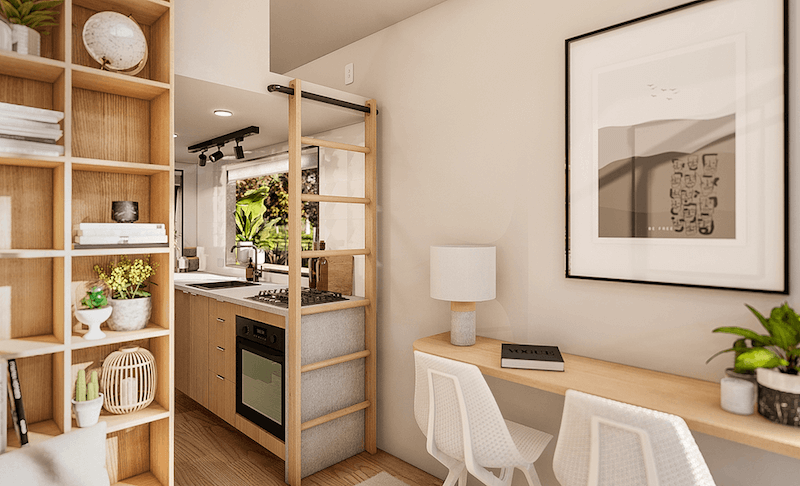
A pest problem in a sprawling house with multiple wings and a large basement tends to stay contained, at least for a while. The same problem in a tiny home or a compact floor plan behaves very differently.
When the kitchen, sleeping area, storage zones, and utility systems all sit within a few feet of each other, there is very little distance for pests to travel before they reach every part of daily life. What might be a minor, isolated issue in a larger home can feel like a full-blown crisis in a smaller one within days.
This difference in scale changes how homeowners should think about prevention and treatment. Compact living spaces are not simply smaller versions of larger homes when it comes to pest activity.
The physical closeness of everything inside them creates conditions where problems escalate faster and where DIY efforts often fall short of actually solving the issue.
Close Quarters Mean Faster Spread
In a compact home, there is rarely a buffer zone between where pests enter and where people eat, sleep, and store belongings.
A cockroach that finds its way into a small kitchen is often only a few feet from a sleeping area, and a mouse that squeezes through a gap near the plumbing may end up in a storage closet that doubles as a pantry. This proximity means pests do not need to travel far to access food, water, and shelter all within the same small footprint.
Tiny homes and compact apartments also tend to have fewer barriers between rooms. Open floor plans, while appealing for their sense of space, offer pests continuous access across the entire living area without the natural chokepoints that hallways and closed doors create in larger homes.
An ant trail that might stay confined to a single room in a bigger house can stretch from the kitchen to the sleeping loft in a tiny home within a matter of days.
This is exactly the kind of situation where reviewing 5 good reasons to hire a professional pest control company becomes genuinely useful for homeowners trying to decide whether a DIY approach is still worth attempting. In a compact space, the margin for error is much smaller, and a treatment that only partially addresses the problem often means dealing with the same pests again within weeks.

Limited Wall Cavities and Storage Zones Raise the Stakes
Small homes are often built with efficiency in mind, which means wall cavities, crawl spaces, and storage areas tend to be more limited and more tightly packed than in a standard-sized house.
A mouse nesting inside a narrow wall cavity in a tiny home is much closer to living spaces than the same nest would be in a larger structure with thicker walls and more distance between rooms.
That proximity makes both the noise and the smell of an infestation far more noticeable, and it often means structural or wiring damage shows up faster as well.
Storage zones present a similar concern. Compact homes frequently rely on multi-purpose storage, tucking bins and boxes into every available nook, from under-stair compartments to lofted shelving above sleeping areas.
When pests establish themselves in one of these tightly packed storage zones, the infestation is rarely isolated for long, since the same space likely holds food, clothing, and other household items in close contact with each other.
A few specific vulnerabilities show up repeatedly in small and compact homes:
-
Kitchen cabinets positioned directly against sleeping or storage areas, giving pests a short path between food sources and hiding spots
-
Combined utility and storage closets where plumbing access points sit next to stored linens or pantry goods
-
Loft or mezzanine sleeping areas connected to the main living space by open stairs rather than sealed doors
-
Compact crawl spaces or foundation skirting with limited room for thorough inspection
Each of these features, common in tiny homes and smaller floor plans, reduces the natural separation that would otherwise slow a pest problem down.
Why Accurate Identification Matters More in Small Spaces
Misidentifying a pest leads to wasted time and ineffective treatment in any home, but the consequences are more pronounced in a compact space where the infestation is already close to every part of daily life.
A homeowner who assumes a pantry moth problem is actually a cockroach issue, for example, might apply the wrong type of treatment entirely, allowing the real infestation to continue spreading while the mistaken effort accomplishes little.
Professional pest control technicians are trained to distinguish between species that can look similar to an untrained eye, and that accuracy directly affects which treatment approach will actually work. This is one of several 5 good reasons to hire a professional pest control company that homeowners in smaller living spaces tend to appreciate once they have gone through a round of ineffective DIY treatment.
Correct identification determines not just which product to use, but where to focus treatment efforts within a floor plan that offers very little room for guesswork.
Targeted Treatment Beats Repeated DIY Applications
Store-bought sprays and traps can offer some relief, but they are usually designed for general use rather than for addressing the specific biology and behavior of the pest actually present.
Repeated DIY applications, especially in a small home where over-the-counter products are used in close proximity to food prep areas and sleeping spaces, can become both a limited solution and an added complication if not handled carefully.
Professional treatment, by contrast, targets the specific pest identified during inspection and accounts for the compact layout of the home itself. A technician working in a tiny home adjusts application methods to account for the shortened distance between treatment areas and daily living spaces, something a generic store-bought product is not designed to consider.
Targeted treatment also tends to address the source of the infestation, such as a nesting site or entry point, rather than just the visible pests, which reduces the likelihood of the same problem returning within a few weeks.

Prevention Carries More Weight in Compact Living
Because small homes offer so little separation between rooms, preventing an infestation from starting in the first place carries more value than it might in a larger property. Sealing entry points, managing moisture, and maintaining clean storage habits all matter more when there is so little distance for a problem to travel once it begins.
A professional pest control assessment often includes prevention-focused recommendations specific to a compact floor plan, identifying the exact gaps or conditions most likely to invite pests into a space with limited buffer zones.
Homeowners in tiny homes or compact apartments who build a habit of periodic professional checks, rather than waiting for visible signs of a problem, tend to avoid the rapid spread that catches so many small-space residents off guard.
Final Analysis
Small and compact homes are not simply miniature versions of larger properties when it comes to pest control. The tight proximity between kitchens, sleeping areas, storage zones, and utility systems means a minor pest issue can affect the entire living space within days rather than weeks.
Limited wall cavities and multi-purpose storage areas add to the challenge, leaving little room for the kind of trial-and-error approach that DIY treatment often requires.
Accurate identification, targeted treatment, and consistent prevention matter in any home, but in a compact living space, they matter enough to make professional involvement a genuinely practical choice rather than an unnecessary expense.


Share: