

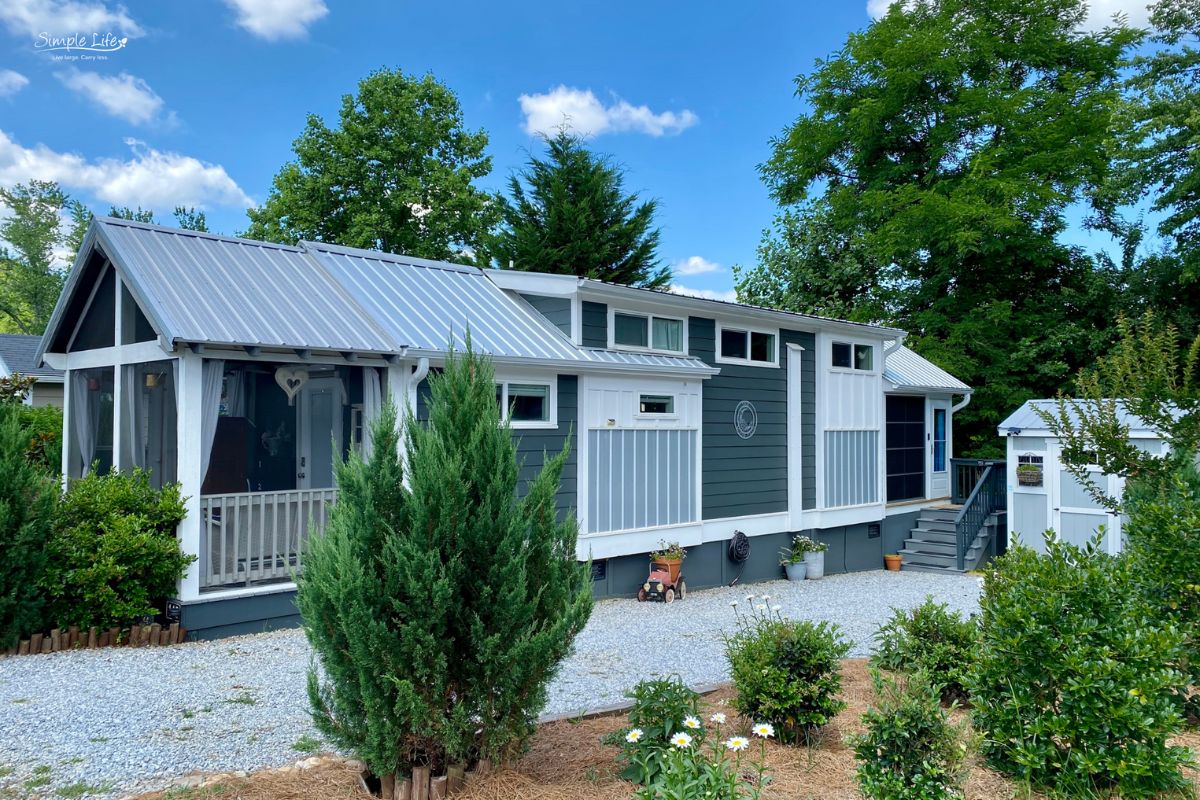
The fastest way to wreck a tiny house budget isn't a design mistake. It's a trailer that gets hitched and towed overnight, a lumber package that disappears before framing starts, or a generator that's gone two days before you planned to set the roof.
Tiny house build site security is the set of steps you take to keep your trailer, materials, and tools on site from the day your foundation or trailer arrives until you move in. Small builds run on tight budgets, and there is rarely room to absorb a $3,000 tool loss or reorder a window package.
We guard construction sites across the Houston area, and we see the same pattern on small projects: owners assume their build is too small to draw attention. Thieves see it differently. A small site with no fence, no lights, and no one around after 6 PM is an easy target.
This guide covers where the risk comes from on a tiny house build, seven steps that work for DIY builders and small contractors, and when it makes sense to bring in a professional guard. It doesn't cover alarm systems for finished, occupied homes.
Why Are Tiny House Builds a Target for Thieves?
Construction theft is common and rarely solved. The National Equipment Register (NER) estimates $300 million to $1 billion in heavy equipment is stolen in the U.S. each year, and that figure leaves out tools and building materials entirely. When equipment does go missing, most of it never comes back: a National Insurance Crime Bureau and NER report found only 21% of stolen heavy equipment was recovered in 2013.
Texas has ranked at or near the top of state theft lists for years, and in one NICB report Houston led every U.S. city in heavy equipment thefts. If you're building in a fast-growing metro, the risk goes up with the number of active job sites around you. Tiny house builds carry specific risks a large job site doesn't:

Trailers and Tiny Houses on Wheels
A tiny house on wheels is built to be moved. That also means a thief with a pickup and a matching hitch can take the whole project, framing and all, in minutes if the coupler is open.
Materials Delivered Before You Need Them
Suppliers often drop the full lumber and window package at once. A stack of framing lumber or a pallet of windows sitting in the open for three weeks is cash on the ground.
Power Tools and Generators
Cordless tool kits, compressors, and portable generators are light, valuable, and easy to resell. They're among the first things thieves look for on a small site.
Remote or Rural Lots
Many tiny house owners build on rural land or a backyard lot behind a fence line. Fewer neighbors means fewer witnesses and more time for a thief to work.
[Image suggestion: half-framed tiny house on a trailer at dusk with lumber stacked beside it. Alt text: "Tiny house on wheels under construction with building materials left on site"]
Theft risk changes with each build phase. Here's what's on site and what to prioritize at each stage:
|
Build phase |
What sits on site |
Main theft risk |
Priority control |
|---|---|---|---|
|
Trailer or foundation |
Trailer, rebar, forms, concrete tools |
Whole trailer towed away |
Wheel boot, coupler lock, VIN on file |
|
Framing |
Lumber, sheathing, nail guns, generator |
Materials and power tools |
Staged deliveries, anchored job box |
|
Dry-in |
Windows, doors, roofing, house wrap |
High-value deliveries |
Install on delivery day, lock the shell |
|
Rough-in |
Copper wire, PEX, water heater, panel |
Copper and equipment |
Locked structure, lighting, cameras |
|
Finishing |
Appliances, fixtures, solar gear, cabinets |
Appliances and electronics |
Monitored cameras, patrol or guard |
7 Steps to Secure a Tiny House Build Site
1. Lock Down the Trailer Before You Build on It
Put a wheel boot on at least one tire and a coupler lock on the hitch the day the trailer arrives. If you can, park it so the tongue faces a wall, tree line, or another obstacle that blocks a truck from backing up to it. Photograph the VIN and keep the title and registration paperwork somewhere off site.
2. Schedule Deliveries Close to Install Day
Ask your supplier to split the order. Framing lumber arrives when you're ready to frame, windows and doors arrive the week you dry in, and appliances come last. Less inventory on site means less to lose on any given night.
3. Store Tools in a Locked Job Box, Not the Truck Bed
A steel job box chained or bolted to something heavy stops most grab-and-go theft. Take your highest-value tools home at night. A tool bag in a truck bed or an unlocked shed is the first thing thieves check.
4. Light the Site and Use Cameras Someone Monitors
Motion-activated LED floodlights on a solar or battery setup cost little and remove the dark corners thieves rely on. Add a cellular or solar-powered camera if the lot has no Wi-Fi. Keep in mind that recorded footage tells you what happened; it rarely stops a theft in progress unless someone is watching live and can respond.
5. Record Serial Numbers and Mark Your Equipment
Keep a list of every tool and machine with its serial number and a photo. Engrave or paint a unique mark on tools. If you rent or own heavy equipment such as a skid steer or mini excavator, register it with NER so police can identify it if it turns up.
6. Make the Site Look Watched
Temporary fencing, a locked gate, and posted no-trespassing signs tell a passerby the site has an owner who pays attention. Vary the times you show up. Give your phone number to one or two neighbors and ask them to call if they see a truck on the lot after hours.
7. Bring In a Licensed Security Guard for High-Risk Phases
Some builds need more than locks and cameras. A guard on site or a scheduled patrol makes sense when you're building several units at once, the lot is remote, or the finishing phase leaves thousands of dollars in appliances and solar equipment inside an unoccupied shell. In Houston, builders and developers use a licensed construction site security guard company to cover nights, weekends, and holidays, when job sites sit empty.
If you hire a guard company in Texas, check three things first: the company holds an active license from the Texas Department of Public Safety Private Security Program, it carries general liability and workers' comp insurance, and it gives you written patrol logs or GPS records that show rounds were made. Short-term or month-to-month terms fit a build schedule better than a year-long contract.

Do You Need a Security Guard for a Single Tiny House Build?
For most single DIY builds, no. Steps one through six handle the bulk of the risk on a small backyard or rural lot, and the cost of a full-time guard would outweigh the value of what's on site. The math changes in three situations:
-
Tiny home communities and multi-unit builds: Several units under construction at once put enough materials, tools, and equipment in one place to justify night coverage.
-
Contractor-led ADU and cabin projects: A builder running four or five small sites at the same time can use scheduled patrols across all of them.
-
Sites with a theft history: If the lot or the neighborhood has already been hit, assume it will be hit again.
In those cases, guard coverage during the finishing phase alone can cost less than replacing a single stolen appliance package and the weeks of delay that follow.
FAQs
How do I keep someone from stealing a tiny house on wheels?
Use a wheel boot and a coupler lock together, remove the trailer's lug nuts or a wheel if it won't move for months, and block the tongue so a truck can't line up with it. Keep the VIN and title on file so police can enter it into stolen vehicle databases fast.
Does homeowners insurance cover tools stolen from a build site?
Coverage varies by policy, and many homeowners policies limit or exclude property on a construction site. Ask your agent about a builder's risk policy before materials arrive.
Are security cameras enough to stop construction theft?
Cameras help with evidence and can deter casual theft, but footage alone doesn't stop a theft in progress. Pair cameras with lighting, locks, and live monitoring or patrols if the site holds high-value items.
When are tiny house build sites most likely to be robbed?
Nights, weekends, and holidays, when no one is on site. The days right after a large delivery are also high risk, since materials are visible from the road.
How do I check if a Texas security company is licensed?
Search the company name or license number on the Texas DPS Private Security online lookup (TOPS). A legitimate company will give you its license number up front.

Share: