

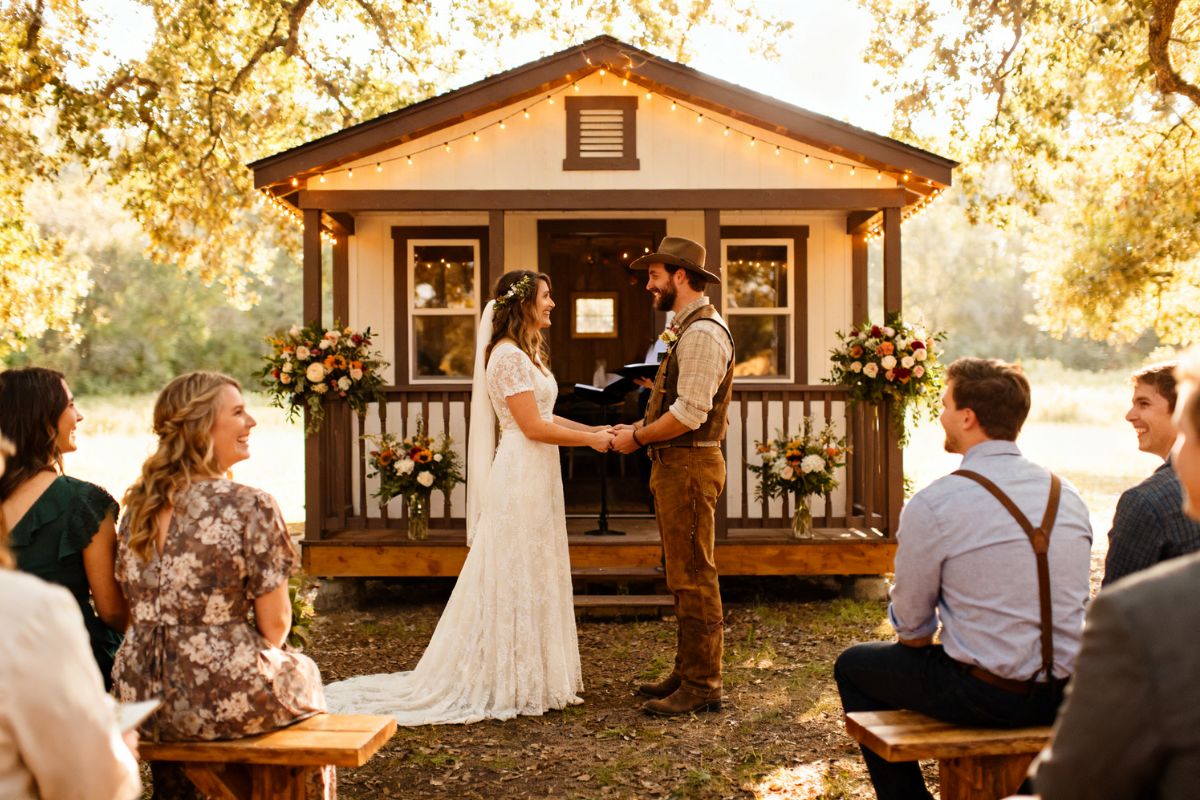
You want a wedding that feels intentional, stylish, and effortless inside a tiny footprint. Start by defining your vibe, then match it to the right home and site. You’ll navigate permits, power, water, and restrooms, plus a lean guest list and layout that actually flows. Catering, bar, and weather backups need tight planning, too.
With smart decor and rentals, small spaces stretch further than you think. Here’s how to make every inch work.
Key Takeaways
- Define your wedding vision, priorities, headcount (10–25), and color palette; write a brief vision statement to prevent scope creep.
- Choose a suitable tiny house/site with level access, adequate light, safe pathways, and spaces for aisle, vows, portraits, and overnight needs.
- Secure permits, understand noise ordinances, arrange parking/shuttles, and obtain liability and liquor insurance with proper certificates.
- Right-size layout and flow: calculate capacity, zone ceremony/mingling/dining, use slim furniture, and maintain clear entries, exits, and signage.
- Plan utilities and contingencies: power circuits or inverter generator, potable water, ADA restrooms, and robust weather backups with tents and timelines.
Define Your Tiny House Wedding Vision
Where do you picture saying “I do” when your venue is only a few hundred square feet? Start by defining the feeling you want: cozy, elegant, boho, or minimalist. Then outline your priorities. Do you value intimacy over spectacle? Are vows, music, or food your focal points? Set a headcount cap that fits micro-living realities—often 10–25 guests.
Choose a color palette and textures that won’t overwhelm: soft neutrals, warm woods, simple florals, candlelight. Decide how formal you want attire and tone to be. Plan a streamlined timeline—short ceremony, focused toast, intentional moments. Identify must-have rituals and cut the rest.
Set a realistic budget, including décor you can reuse. Finally, write a short vision statement to guide every decision and prevent scope creep.

Choose Your Tiny House Wedding Site and Home
Ready to turn your vision into a real address? Start by deciding whether you’ll host at a private property, a tiny house resort, or a short-term rental with outdoor space. Prioritize easy access, level ground for seating, and safe pathways.
If you’re inviting a few overnighters, confirm sleeping capacity, bathroom count, and kitchen functionality.
Pick a tiny house that reflects your style and supports key moments: a roomy doorway for the aisle, a porch for vows, or a loft for portraits. Check natural light for photos and sunset direction for ceremony timing.
Ensure power for music and lighting, plus water for catering needs. Plan zones: ceremony, mingling, dining, and a quiet retreat. Finally, confirm parking, accessible entry, and a simple backup layout.
Lock Down Permits, Noise Rules, and Insurance
How soon should you tackle the unglamorous stuff—permits, noise limits, and insurance? Immediately after selecting your site. Call the local planning or zoning office and ask what category your event falls under: private gathering, special event, or short-term rental use. Confirm whether you need a temporary event permit, fire inspection, portable restroom requirements, and parking or shuttle plans. Get deadlines in writing.
Next, check local noise ordinances. Note curfews, decibel caps, and amplifier restrictions. Share these limits with your DJ, band, and vendors, and plan a clear cutoff time.
Secure event liability insurance and host liquor liability if serving alcohol. Ask the venue and vendors for certificates of insurance naming you as additional insured. Document everything and keep digital copies accessible.

Right-Size Your Tiny House Wedding Guest List and Layout
So what’s the sweet spot between intimate and overcrowded? Start by mapping your tiny house footprint plus any deck or yard. Mark non-negotiables: aisle width, ceremony spot, chairs, food service, and photo nook. From that, calculate standing and seated capacities. A good rule: allow 8–10 square feet per seated guest, 6–8 for standing.
Prioritize people who bring joy and support your story. Create A, B, and virtual lists. Send early feelers to essential guests to confirm feasibility. Consider roles: a smaller group may mean fewer plus-ones and no kids, clearly noted on invites.
Design traffic flow. Keep entries, exits, and a buffer around doors clear. Use slim furniture, bench seating, and cocktail tables. Zone spaces for ceremony, mingling, and a compact dance area. Keep pathways intuitive with simple signage.
Plan Power, Water, and Restroom Solutions
With your layout set, turn to the backstage basics that keep everything running: electricity, water, and toilets. Map your power needs first: lighting, sound, heaters or fans, and photo booth gear. Check your panel’s amperage, run loads on separate circuits, and use outdoor-rated cords and GFCI protection. If the grid’s limited, rent a quiet inverter generator and position it downwind.
Plan water next. Confirm a potable source, test pressure, and stage fill points for handwashing and cleanup. Use food-safe hoses, backflow preventers, and labeled spigots. For graywater, route to an approved drain or capture tanks per local rules.
Finally, book restrooms sized for your headcount—ADA-compliant if needed. Add lighting, sanitizer, ventilation, and discreet signs. Verify delivery access and service schedule.

Set Up Tiny House Wedding Catering and Bar
Pull together a lean, location-smart menu that fits your tiny footprint and timeline. Choose dishes that travel well, hold temperature, and plate fast—think skewers, sliders, grain bowls, and bite-size desserts. Favor one hot entrée, one cold, and abundant handhelds. Confirm prep space, refrigeration, and trash handling with your caterer; ask for compact equipment and minimal staff.
Streamline service. Stagger stations to prevent bottlenecks, label allergens, and use reusable or compostable ware sized for small surfaces. Schedule bussing so counters never pile up.
For drinks, keep it simple: beer, wine, one signature cocktail, and a zero-proof option. Use canned or batched formats; skip complex garnishes. Rent a narrow bar, rely on under-counter coolers, and place water nearby. Train bartenders on portion control and quick cleanup.
Weather-Proof Your Tiny House Wedding With Backups
Suddenly stormy or blazing hot? Build a Plan B that’s as intentional as your vows. Book a pop-up tent or clear-top canopy with sidewalls sized for all guests. Confirm delivery, setup times, and staking options for wind.
If heat’s likely, rent misting fans, shade sails, and hydration stations with electrolyte add-ons. For cold snaps, line up propane heaters, blankets, and a hot beverage bar. Create two timelines: outdoor ideal and weather backup, with cues for vendors to pivot three to four hours out. Protect power with outdoor-rated cords, GFCI outlets, and a small generator.
Keep non-slip mats at entries and stash towels for damp floors. Communicate the dress code: layers, waterproof shoes, sun hats. Rehearse the switch so execution feels seamless.

Decor Tricks That Maximize Tiny House Spaces
Backup plans handled, you can turn that compact canvas into a polished, guest-ready setting.
Start by editing your palette: two neutrals and one accent keep lines clean and photos cohesive. Use vertical space—hang florals, lanterns, or bud vases from beams and doorways. Swap bulky centerpieces for slim tapers, low bowls, or a single statement branch.
Choose double-duty decor: an entry mirror brightens and expands; benches hide baskets; a bar ledge becomes a dessert perch later. Opt for sheer drape panels to soften walls without stealing inches.
Layer warm light—fairy strands, candles, and a focused sconce—to create depth. Corral necessities in trays to reduce visual noise. Finally, leave negative space; a few intentional vignettes beat clutter and keep movement graceful.
Build Your Timeline, Key Rentals, and Budget Savers
Where do you start when every minute and square foot counts? Map a tight timeline: deliveries finished 2 hours before guests arrive, ceremony 20 minutes, photos 30, dinner service 45, toasts 15, dance set 45, last call 20, strike completed by quiet-hours. Build buffers—10 minutes between transitions—so no one bottlenecks at doors or steps.
Book key rentals sized for tiny spaces: slimline dining tables, stacking chairs, a collapsible bar, narrow buffet risers, compact heaters or fans, low-decibel generator, and a restroom trailer if plumbing’s limited. Add a coat rack, battery lanterns, and a rain canopy with gutters.
Save budget by bundling from one vendor, choosing weekday rates, using preset menus, renting mixed glassware, borrowing décor, repurposing ceremony florals at dinner, and limiting bar to beer, wine, and one signature cocktail.

Conclusion
You’ve got this. When you define your vision, pick the right tiny house and site, and button up permits and insurance, everything clicks. Keep your guest list tight, your layout efficient, and your utilities squared away. Line up smart catering, stash backups for weather, and use décor that stretches every inch.
Then lock your timeline, reserve key rentals, and trim costs with intention. Do that, and your tiny house wedding will feel effortless, personal, and wildly memorable.


Share: