
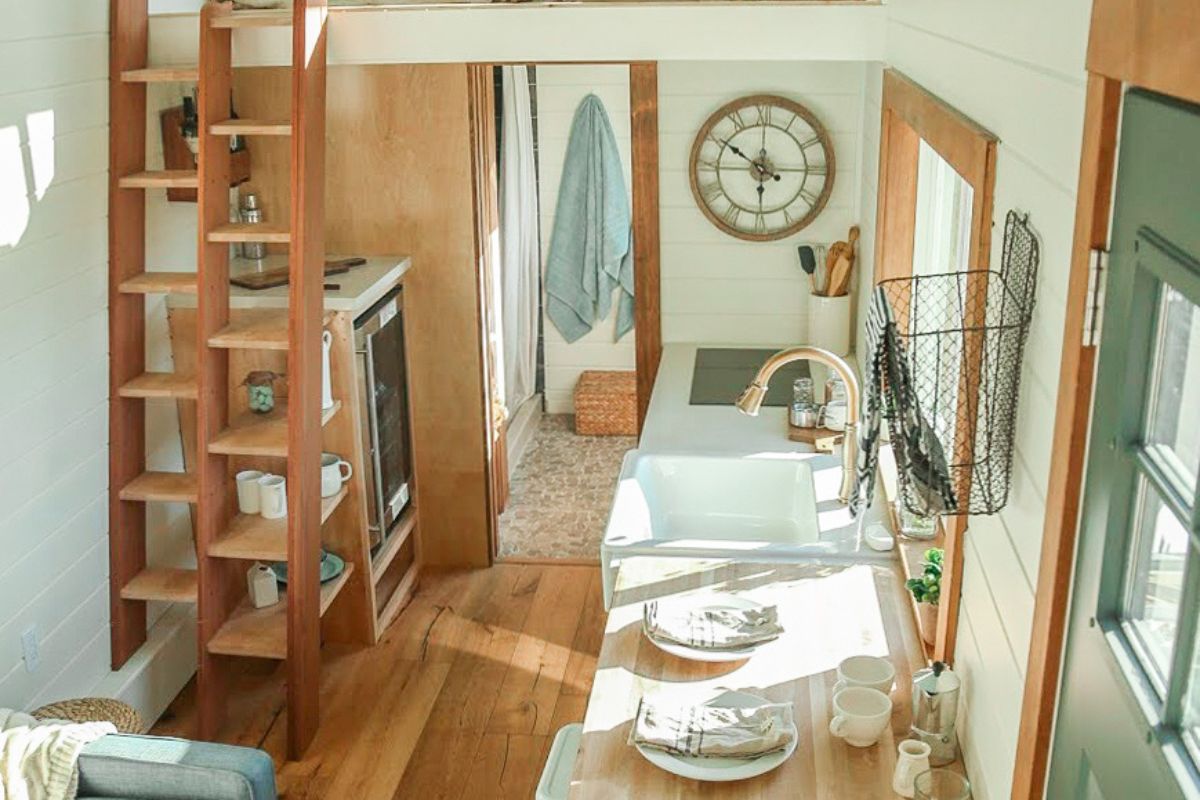
As housing costs continue to rise relentlessly across the US, many Americans are looking for any solution they can get in terms of home ownership. One such alternative is the tiny home -- a way to get an affordable house without having to sacrifice comfort or quality of life.
Once a fringe, niche lifestyle choice, tiny living has since become a recognized alternative that offers greater financial freedom, sustainability, and reduced maintenance to home ownership. This shift is most visible in Portland, Oregon, a city long known for its innovation when it comes to housing.
Portland: The Tiny Home Pioneer
The tiny home concept didn't originate in Portland -- but Portland has nonetheless become the city most associated with tiny homes. Portland was an early adopter of relaxed accessory dwelling unit (ADU) regulations, which allows homeowners to build secondary small-footprint residences on their properties. This openness to alternative housing models helped "normalize" tiny homes as a housing option in Portland.

Zoning flexibility, a strong sustainability culture, and community support have also helped make Portland a natural habitat for tiny-home living. While Portland still struggles with housing affordability, tiny homes have become a far more common part of the city's housing strategy.
How Much for a Tiny Home in Portland?
Much like full-sized homes, Portland house prices for tiny homes vary depending on size, materials, and whether they're mobile or built on a foundation. Nationally, the average tiny home costs anywhere between $30,000 and $120,000.
By comparison, the median price of a traditional home in Portland is over half a million dollars, which puts it well out of reach of most first-time home buyers. Even condos and townhomes, which are generally more affordable, can run between $300,000 and $400,000, which is still quite a bit higher than even the most custom-designed tiny home.
Why is the price gap so significant? Mostly it has to do with land, foundation work, and utility connections. Depending on the variables, building or buying a tiny home can be less than half that of a conventional home in the city.
Types of Tiny Houses
Not all tiny houses are created equal. There are a number of variants, each with their own style and financial considerations.
First are the Tiny Homes on Wheels (THOWs). These are built on trailers and classified similarly as RVs, with no permanent foundation. They're not eligible for traditional mortgages, and have to be placed in RV parks, backyards, or tiny-home communities.
Next is the prefabricated or modular tiny home, which is built off-site and then transported wherever it's meant to be. These can sit on temporary or permanent foundations, and often have predictable pricing and shorter construction timelines. These are popular among first-time buyers.
There are also small homes built on permanent foundations, which are functionally tiny homes but are legally considered full-size dwellings. These are eligible for mortgages and standard utilities, and have a higher upfront cost due to property taxes and the necessary foundation work.
Finally, there are cabins and micro-cottages, which tend to be rustic or minimalist and are often used as guest homes or part-time residences.
Where Can You Build a Tiny Home in Portland?
If you're looking to build a tiny home in Portland, you have a few options. You can buy the land in question, which will cost more in terms of upfront costs and property taxes, but is often the simplest solution.
You could also join one of Portland's many tiny home communities, which share amenities, split the land costs, and have more social cohesion. Some well-established tiny home communities in Portland include the Simply Home Community, the Gooseberry Community, the SquareOne Villages in nearby Eugene, and Dignity Village. Most of these communities have requirements of their own, such as size limits, approved builders, monthly fees, and expectations for community participation.

Can You Get a Mortgage for a Tiny Home?
Given the housing trends in Portland, it's doubtful most buyers can afford to build or purchase a tiny home out of pocket. Financing can often be tricky for tiny homes, but far from impossible.
A traditional mortgage for a tiny home is only available when the home is built on a permanent foundation, meets local building codes, and the buyer owns the land in question. They're not available for THOWs or RV-class tiny homes.
That doesn't mean financing is impossible, though. Personal loans, RV loans, payment plans (from tiny home builders), home equity loans, and land loans are all potential options for buyers looking to get into a tiny home. And because tiny homes exist in something of a gray area, many buyers rely on multiple kinds of financing.
Portland’s housing challenges aren't going away anytime soon, but tiny homes offer a realistic and sustainable alternative for residents priced out of the traditional market.
Share: