

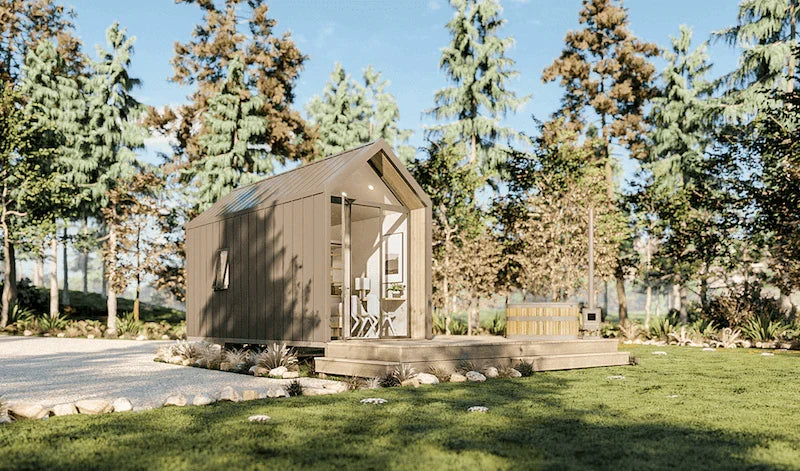
The tiny home movement has captured a lot of attention over the past decade, and for good reason. Lower mortgage payments, reduced utility bills, minimal maintenance, and the freedom to live with less are all genuinely appealing. The marketing around tiny homes is compelling, and the lifestyle content online makes it look effortless.
But there is a side of tiny home living that does not get nearly as much attention, and it is the financial side that catches a lot of new owners off guard. The upfront savings are real. The hidden costs are just as real, and knowing about them before you commit can save you significant money and stress down the road.
This is not an argument against tiny home living. For many people it is a genuinely great choice. It is an argument for going in with your eyes open and a realistic picture of what it actually costs.
The Purchase Price Is Just the Beginning
The sticker price on a tiny home is what draws most people in. Compared to a traditional home purchase, the numbers look almost too good to be true. But the purchase price is rarely the full story.
Land Costs
If you are buying a tiny home on wheels, you still need somewhere to put it. Renting a spot in a tiny home community, an RV park, or on private land adds a monthly cost that can range from a few hundred to over a thousand dollars depending on location and amenities. If you want to own the land outright, that is an additional purchase that can easily exceed the cost of the tiny home itself in desirable areas.
For foundation-built tiny homes, the land cost is built into the transaction, but zoning restrictions in many areas limit where tiny homes can legally be placed. Finding compliant land at a reasonable price is often harder and more expensive than buyers initially expect.

Delivery and Setup
Tiny homes on wheels need to be transported to their final location, and that transportation is not free. Delivery costs vary based on distance and the size of the home, but they can run from $1,000 to $5,000 or more for long-distance moves. Foundation preparation, utility hookups, and site work add further costs that are not included in the base purchase price.
Customization and Upgrades
Base model tiny homes are built to a standard specification. If you want higher-quality finishes, additional storage solutions, off-grid capability, or any customization to suit your lifestyle, those upgrades come at a cost. It is easy to add $10,000 to $30,000 to the base price of a tiny home through customization before you have even moved in.
Financing Is More Complicated and More Expensive
One of the most significant hidden costs of tiny home living is the financing. Traditional mortgages are generally not available for tiny homes, particularly those on wheels, because they do not qualify as real property in most lending frameworks.
This means buyers are often forced to use personal loans, RV loans, or specialized tiny home financing, all of which carry higher interest rates than a conventional mortgage. On a $80,000 tiny home financed at 9 percent over 15 years versus a comparable mortgage at 6.5 percent, the difference in total interest paid is substantial.
For buyers who are transitioning from a traditional home to a tiny home, the financing gap is one of the most important financial factors to plan around. The proceeds from selling your current home often play a critical role in making the tiny home purchase financially viable without expensive financing.
Insurance Costs That Surprise New Owners
Insuring a tiny home is not as straightforward as insuring a traditional home, and the cost per square foot is often significantly higher.
Tiny homes on wheels are typically insured as recreational vehicles, with coverage that may not fully protect the structure or its contents as a primary residence. Specialty tiny home insurance policies exist but carry premiums that can feel disproportionate given the home's value. And if your tiny home is in a location prone to weather events, flooding, or other risks, those premiums climb further.
Many tiny home owners also discover that standard renters or homeowners insurance policies have significant gaps when applied to their specific living situation. Understanding exactly what coverage you have and what it costs is an important step before purchase, not after.

Utility Costs Are Not Always as Low as Expected
The promise of lower utility costs is one of the most common draws of tiny home living, and it is partially true. Heating and cooling a smaller space does cost less in absolute terms. But the cost per square foot is often higher, and off-grid living comes with its own set of expenses.
Off-Grid Setup Costs
Solar panels, battery storage systems, composting toilets, rainwater collection, and propane systems all cost money to install and maintain. A fully capable off-grid setup can add $15,000 to $40,000 to the cost of a tiny home. These systems also require ongoing maintenance and eventual replacement.
Water and Waste Management
If your tiny home is not connected to municipal water and sewage systems, managing water and waste becomes a regular expense and responsibility. Water delivery, tank pumping, and system maintenance all add costs that are easy to overlook when the lifestyle content focuses on the freedom and simplicity of off-grid living.
Storage and Lifestyle Costs
Living in a tiny home means living with significantly less space, and that has financial implications that are not always obvious upfront.
Many tiny home owners end up renting storage units for belongings that do not fit in their home. At $100 to $300 per month, storage costs can quickly eat into the savings that tiny home living was supposed to provide. The decluttering process before moving into a tiny home often involves selling, donating, or disposing of furniture and belongings that cost money to replace if circumstances change.
Hobbies and activities that require space, tools, or equipment may also need to be restructured around the limitations of a smaller living environment. Some people adapt easily. Others find that the lifestyle constraints of tiny home living create unexpected costs as they find workarounds.
Resale Value and Exit Challenges
One of the least discussed hidden costs of tiny home living is what happens when you want to move on. The resale market for tiny homes is smaller than the traditional housing market, and values do not appreciate in the same way that conventional real estate does.
Tiny homes on wheels depreciate like vehicles rather than appreciating like real estate. A tiny home that cost $70,000 new may be worth $50,000 or less after five years. For buyers who view their tiny home as a financial investment as well as a lifestyle choice, this is a critical consideration.
The process of selling a tiny home and transitioning to a different living situation also takes planning. If you are moving from a traditional home into a tiny home, the speed at which you can sell your current home directly affects your financial flexibility during the transition.
For homeowners in the Columbus, Georgia area who are planning a transition to tiny home living and need to sell your home fast in Columbus to free up capital for the move, Assured Property Solutions offers a direct cash purchase with no repairs required and a closing timeline that fits around your transition plans.
The Zoning and Legal Costs
Navigating the legal landscape of tiny home living is more complex and potentially more expensive than most buyers anticipate. Zoning laws vary significantly by state, county, and municipality, and what is permitted in one location may be entirely prohibited in another.
Getting the necessary permits, variances, or approvals for a tiny home installation can require legal fees, application costs, and significant time. In some cases, homeowners have invested in a tiny home setup only to face legal challenges that require costly modifications or relocation.
Researching the specific legal requirements for your intended location before purchase is essential, and budgeting for the possibility of unexpected legal or compliance costs is prudent.

Community Fees and HOA Restrictions
If you are placing your tiny home in a community or on land governed by an HOA or similar organization, community fees are an ongoing cost to factor in. These fees cover shared amenities and maintenance but add to your monthly expense base.
Some communities also have restrictions on the types, sizes, or appearance of homes that can be placed there, which can limit your options or require modifications to your tiny home that add cost.
Planning for the Hidden Costs
None of these costs make tiny home living a bad choice. For many people, the lifestyle benefits and the financial advantages relative to traditional homeownership still make it the right decision. But going in with an accurate financial picture is far better than discovering these costs after you have committed.
-
Budget beyond the purchase price. Add land, delivery, setup, permits, and customization to your total cost estimate.
-
Understand your financing options. Compare the true cost of available financing and factor in the interest differential from a traditional mortgage.
-
Research insurance thoroughly. Get actual quotes for specialty tiny home insurance before you finalize your purchase decision.
-
Plan your transition carefully. If you are selling a traditional home to fund the move, the timing and method of that sale significantly affects your financial position going into tiny home ownership.
-
Know the zoning rules for your intended location. Do this before purchase, not after.
Final Thoughts
Tiny home living offers genuine financial and lifestyle benefits for people who go into it prepared. The hidden costs are real, but they are manageable when you know about them in advance and plan accordingly.
The people who struggle most with the financial side of tiny home living are the ones who budgeted based on the purchase price alone and did not account for the full range of costs that come with the lifestyle. Do the complete calculation, understand all the variables, and make your decision based on what tiny home living actually costs in your specific situation. That is how you set yourself up to enjoy the lifestyle without the financial surprises.
Share: