

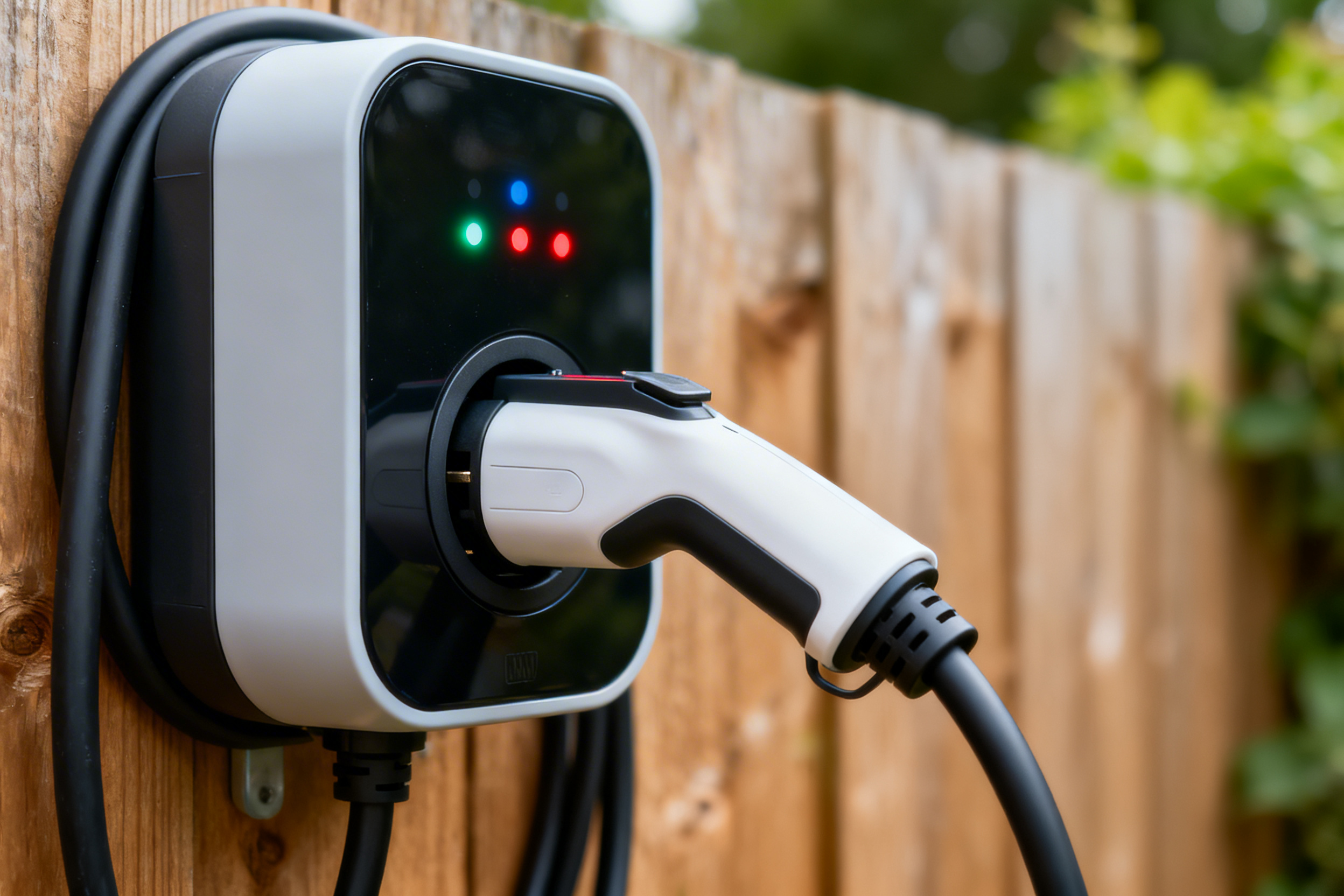
Many homes require preparation before supporting efficient EV charger installation. Older 100-amp panels often lack capacity for a Level 2 home EV charging station that adds 30 to 50 amps continuously.
Professionals perform load calculations to determine if an EV electrical panel upgrade to 200 amps becomes necessary. Alternatives like energy management systems or load-sharing devices sometimes avoid full upgrades in constrained setups.
Introduction
Homeowners transitioning to electric vehicles frequently encounter unexpected hurdles with their existing electrical infrastructure. Panels sized for traditional loads struggle when a Level 2 charger draws substantial continuous power, leading to tripped breakers, safety concerns, or outright inability to support fast charging.
In some cases, advanced power management devices optimize usage without requiring extensive service changes. Such professional approaches deliver dependable performance tailored to individual homes. For more details on qualified execution of these assessments and installations, consult experienced technicians who adhere to rigorous standards and prioritize long-term system reliability.
Assessing Your Home's Readiness for EV Charging
Homeowners adopting electric vehicles often find their current electrical setup unprepared for the added continuous load of a Level 2 charger. Most residential services installed before 2000 provide only 100 amps total, leaving limited headroom after accounting for lighting, appliances, heating, and cooling demands.

Professionals start with a detailed load calculation following CSA C22.1 requirements, reviewing peak historical usage from utility bills alongside nameplate ratings of major appliances. This process reveals available spare capacity, typically measured in amps at 240 volts. A standard Level 2 home EV charging station draws 32 to 48 amps continuously, so homes near maximum utilization frequently require intervention.
-
Check your main panel label for bus rating and main breaker size.
-
Review recent utility bills for peak kW demand to estimate headroom.
-
Identify high-draw appliances already on dedicated circuits.
-
Note the age and brand of the existing panel for compatibility assessment.
-
Confirm grounding electrode conductor size meets current code.
In practice, many 100-amp services support only a 16-amp or 20-amp charger safely without modification, resulting in slower overnight charging that adds roughly 80 to 120 kilometres of range. Upgrading capacity becomes the practical path for owners seeking full-speed convenience.
Technical Steps for EV Charger Installation
Once readiness assessment confirms feasibility, installation proceeds through precise steps governed by the Canadian Electrical Code. A dedicated 240-volt circuit supplies the charging station, typically requiring a 40-amp to 60-amp breaker depending on the charger's rated output. Wiring uses appropriately sized copper conductors protected by conduit where exposed or subject to damage.
Selecting and Installing the Charger
Level 2 chargers deliver 7 to 19 kW, adding substantial range overnight compared to standard 120-volt outlets. Hardwired units offer reliability, while plug-in models provide flexibility if future relocation becomes necessary. Mounting occurs on garage walls or exterior posts with weatherproof enclosures for outdoor locations.
Choose chargers with J1772 connectors compatible with most North American EVs, and verify UL or CSA certification to meet code and warranty requirements.
Load Management Alternatives When Upgrades Are Challenging
In homes with limited panel capacity, EV home electrical panel upgrade represents one solution, yet energy management systems provide viable alternatives. These devices monitor total household load and dynamically adjust charging current to prevent overloads, often allowing full-speed charging during low-demand periods.
Here are key options professionals consider:
-
Energy management systems (EVEMS) that pause or throttle charging when other high-draw appliances operate.
-
Load-sharing hardware enabling multiple chargers on a shared circuit without exceeding service limits.
-
Smart chargers with built-in demand response features that schedule charging for off-peak hours.
-
Circuit splitters or power monitors that prioritize essential loads over EV charging.
-
Demand charge controllers compliant with CEC rules for excluding managed EV loads from calculations.
The table below compares common approaches:
|
Approach |
Typical Cost (CAD) |
Requires Panel Upgrade? |
Charging Speed Impact |
Best For |
|
Full panel upgrade |
2,000 – 5,000 |
Yes |
Full rated speed |
Homes planning multiple additions |
|
Built-in smart charger scheduling |
800 – 1,500 |
No |
Variable, often full off-peak |
Simple time-based needs |
|
External energy management system |
1,000 – 2,500 |
No |
Dynamic adjustment |
Constrained 100-amp services |
|
Load-sharing device |
500 – 1,200 |
No |
Shared between devices |
Multi-EV households |
In practice, these technologies expand accessibility for residential EV charging without always necessitating service changes, delivering safe, efficient performance aligned with code.
Professional Implementation and Future-Proofing Considerations
Licensed electricians handle EV charger installation with strict adherence to the Canadian Electrical Code, Section 86, which governs EV supply equipment requirements. Permitting becomes mandatory for dedicated circuits over 30 amps or any service modifications, involving local inspection to verify compliance before energization. Professionals coordinate with utility providers when service upgrades affect the meter or overhead/underground connections.
Code Compliance and Safety Best Practices
Installations incorporate GFCI protection where required by provincial amendments, proper strain relief on cords, and mounting heights that prevent vehicle contact or water ingress. Bonding ensures metallic parts remain at equipotential, reducing shock hazards in damp locations. Documentation includes as-built drawings, load calculations, and certification labels for future reference or resale disclosure.
Future-Proofing Strategies for Evolving Needs
Forward planning accommodates multiple vehicles, battery storage integration, or bidirectional charging capabilities emerging in newer models. Reserving conduit pathways during initial work simplifies additions, while selecting panels with expandable capacity supports growth without repeated disruptions.
-
Install oversized conduit (minimum 27 mm) from the panel to the charging location for easier future wire pulls.
-
Choose chargers with over-the-air update support and open protocols for long-term compatibility.
-
Add subpanel provisions during EV home electrical panel upgrade for dedicated EV circuits.
-
Incorporate energy monitoring at the service entrance to track consumption patterns.
-
Prepare grounding electrode enhancements compliant with the latest code for lightning-prone regions.
Also, electric vehicles continue gaining market share, making residential EV charging readiness a tangible selling point. During major panel work, install an empty conduit from the main service to the garage or driveway location most likely used for parking. This simple addition dramatically reduces labour and disruption costs when a home EV charging station or electric car charger for home becomes necessary later.
The table below outlines preparation approaches:
|
Preparation Strategy |
Typical Added Cost (CAD) |
Benefit Level |
Future Adaptability |
|
Standard conduit only |
200 – 500 |
Low |
Basic wire replacement |
|
Oversized conduit + spare pulls |
400 – 800 |
Medium |
Easier upgrades or additions |
|
Reserved subpanel space |
800 – 1,500 |
High |
Multiple chargers or storage integration |
|
Full EV home electrical panel upgrade with extras |
2,500 – 5,000 |
Very High |
Comprehensive readiness |
|
EV energy management integration |
1,000 – 2,500 |
High |
Avoids overloads without major changes |
These measures transform residential EV charging from a reactive addition into a resilient system. Engaging qualified professionals who apply current standards and anticipate trends delivers reliable, safe performance for years ahead. The primary keyword EV charger installation captures the essential professional step that makes home charging practical and sustainable.
Preparing Your Home for Reliable EV Charging
Successful EV charger installation depends on thorough assessment, appropriate technical solutions, and professional execution that prioritizes safety and code compliance. From accurate load calculations that reveal true capacity constraints to smart load management alternatives that preserve existing service where feasible, each step builds a dependable foundation for residential EV charging.
Forward-thinking choices, such as oversized conduit, expandable panel provisions, and energy monitoring integration, position the system to adapt as vehicle technology and household needs evolve. The result is convenient, cost-effective home charging that supports daily driving without compromising electrical safety or performance.



Share: