

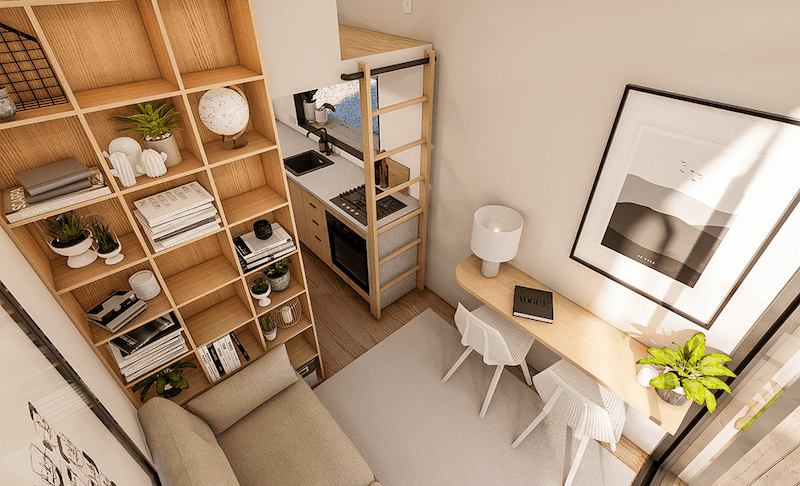
When summer heat waves hit, tiny homes can quickly become uncomfortable without proper cooling strategies. You can maintain a pleasant indoor environment by focusing on ventilation and insulation.
Opening windows for cross-breezes and using ceiling fans can make a significant difference. Plus, adding reflective shades helps block out harsh sunlight. But what other practical solutions can enhance your tiny home's comfort during those sweltering days? Let's explore effective techniques to keep your space cool.
Key Takeaways
-
Maximize cross-ventilation by strategically opening windows and doors to promote airflow during heat waves.
-
Use ceiling fans to circulate air, enhancing cooling and reducing perceived temperatures.
-
Implement effective insulation to minimize heat transfer and maintain a comfortable indoor climate.
-
Install awnings or shade structures to block direct sunlight from windows and reduce indoor heat.
-
Landscape with shade trees or shrubs to provide natural cooling around your tiny home.
Identifying the Challenges of Cooling a Tiny Home
Cooling a tiny home can be challenging, especially when space and airflow are limited. You might find that traditional cooling methods just don’t cut it.
One major issue is heat retention; tiny homes can trap heat quickly, making them uncomfortable during warm months. To combat this, focus on effective ventilation strategies. Open windows strategically to create cross-ventilation, allowing fresh air to flow through your space.
Consider using ceiling fans to enhance airflow without relying on energy-intensive air conditioners. Installing vents or exhaust fans can also help remove hot air.

Why Insulation Matters for Tiny House Comfort
While you might think of insulation as simply a way to keep your tiny home warm, it plays an essential role in maintaining overall comfort, especially during hot weather.
Different insulation types—like spray foam, fiberglass, or cellulose—affect your home’s thermal performance. Good insulation minimizes heat transfer, keeping your interior cooler when temperatures soar outside.
It creates a barrier that not only retains cool air but also reduces the need for excessive cooling systems, making your tiny home more energy-efficient.
Plus, choosing eco-friendly insulation materials can enhance your sustainability efforts.
Essential Cooling Techniques for Tiny Homes
As temperatures rise, implementing effective cooling techniques becomes essential for maintaining comfort in your tiny home.
Start by maximizing natural ventilation; open windows and doors during cooler times of the day to create cross-breezes. You can also strategically use fans to circulate air, enhancing the cooling effect.
Incorporating thermal mass materials, like stone or concrete, helps absorb heat during the day and releases it when temperatures drop, keeping your space more comfortable.
Consider using light-colored or reflective window coverings to deflect sunlight, and plant trees or shrubs outside to provide shade.
Strategic Window Placement for Optimal Airflow
To guarantee ideal airflow in your tiny home, carefully considering window placement is essential.
Start by evaluating the window orientation; south-facing windows capture the most sunlight, while north-facing ones remain cooler.
Position your windows to promote airflow dynamics by creating cross-ventilation. For instance, place a window on opposite walls to allow fresh air to enter and hot air to escape.
You can also use strategically placed awnings or overhangs to shield windows from direct sunlight while still allowing breezes to flow through.
By optimizing window placement, you’ll enhance your tiny home's natural cooling, making it more comfortable during heat waves.
This eco-friendly approach not only saves energy but also keeps your space inviting and pleasant.

How to Block Sunlight With Shades and Blinds?
Blocking sunlight effectively can greatly lower the temperature in your tiny home, making it more comfortable during hot days.
Start by installing roller shades on your windows. They’re easy to operate and can be adjusted to let in just the right amount of light while blocking heat. For maximum efficiency, consider blackout curtains; they provide excellent insulation and keep your space cool by preventing sunlight from penetrating.
Choose light-colored fabrics for your shades and curtains to reflect sunlight rather than absorb it.
Additionally, you can combine these options with outdoor awnings or plants to create natural barriers against the sun. By strategically using roller shades and blackout curtains, you'll not only enhance comfort but also save on energy costs.
Choosing Fans and AC for Cooling Tiny Homes
While shades and blinds can greatly reduce heat, choosing the right fans and air conditioning options is equally important for keeping your tiny home cool.
Start by installing ceiling fans to circulate air efficiently; they’re often energy-efficient and can lower perceived temperatures.
For more intense heat, consider portable air conditioners or window units that can easily be stored when not in use.
Evaporative coolers are another eco-friendly option, especially in dry climates.
Ductless systems offer a permanent solution with adjustable settings.
Don't forget smart thermostats to optimize energy use and maintain comfort.
Just be mindful of noise levels—select quieter models to keep your tiny sanctuary peaceful during those sweltering heat waves.
Design Tips for Creating a Cross-Breeze
Creating a cross-breeze in your tiny home not only enhances comfort but also reduces reliance on mechanical cooling. To implement effective cross ventilation strategies, start by positioning windows and vents across from each other. This setup encourages airflow optimization, allowing cooler air to flow in while warmer air exits.
Consider using window screens to keep insects out while maintaining airflow. You can also incorporate ceiling fans to enhance the breeze, directing air where you need it most.
If possible, install operable skylights to create additional openings for hot air to escape. Finally, avoid heavy drapes during the day, as they can trap heat.
These simple design tips will keep your tiny home comfortable without overusing energy.
How Landscaping Can Keep Your Tiny Home Cool
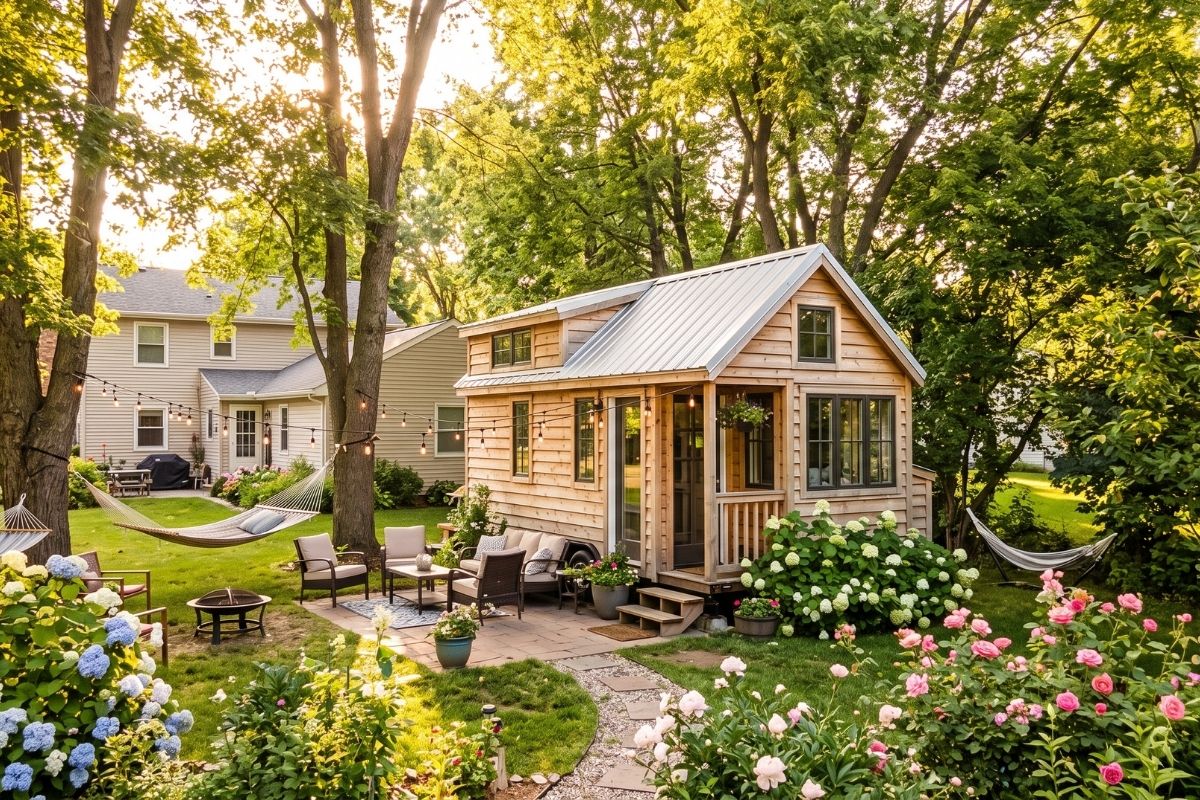
Landscaping plays an essential role in keeping your tiny home cool, especially during those sweltering summer months. Incorporate shade trees around your home to block direct sunlight, creating a natural cooling effect.
Choose native plants for their adaptability and moisture retention, which helps maintain a balanced environment. Thoughtful garden design can lead to cool pathways that reflect heat and provide comfortable outdoor seating areas.
You might also consider installing windbreak barriers, like shrubs or fences, to shield your home from hot winds. Finally, opt for heat reflective surfaces in your outdoor spaces, reducing heat absorption.
With these landscaping techniques, you can enjoy a cooler, more comfortable tiny home even on the hottest days.

Affordable Ways to Stay Cool in Your Tiny House
To keep your tiny house cool without breaking the bank, consider simple yet effective strategies that maximize airflow and minimize heat.
Start by utilizing natural ventilation; open windows and use cross-ventilation to create a revitalizing breeze. Installing window screens can help keep bugs out while letting in fresh air.
You might also invest in lightweight, reflective curtains to block direct sunlight during peak hours. Another budget-friendly option is to create shade outside with awnings or plants, reducing heat buildup.
Fans can be a great addition; they circulate air without using much energy.
Finally, consider using a dehumidifier to manage moisture, as humidity can make heat feel more intense.
These strategies will help you stay cool while being eco-friendly.
Conclusion
By implementing these cooling strategies, you can guarantee your tiny home stays comfortable during heat waves. Focus on effective insulation, strategic window placement, and using fans or portable AC units. Don’t forget about the power of landscaping; shade trees can greatly lower temperatures around your home. With a bit of planning and the right techniques, you’ll create a cool, inviting space without relying heavily on energy consumption. Stay cool and enjoy your tiny living experience!
Share: