

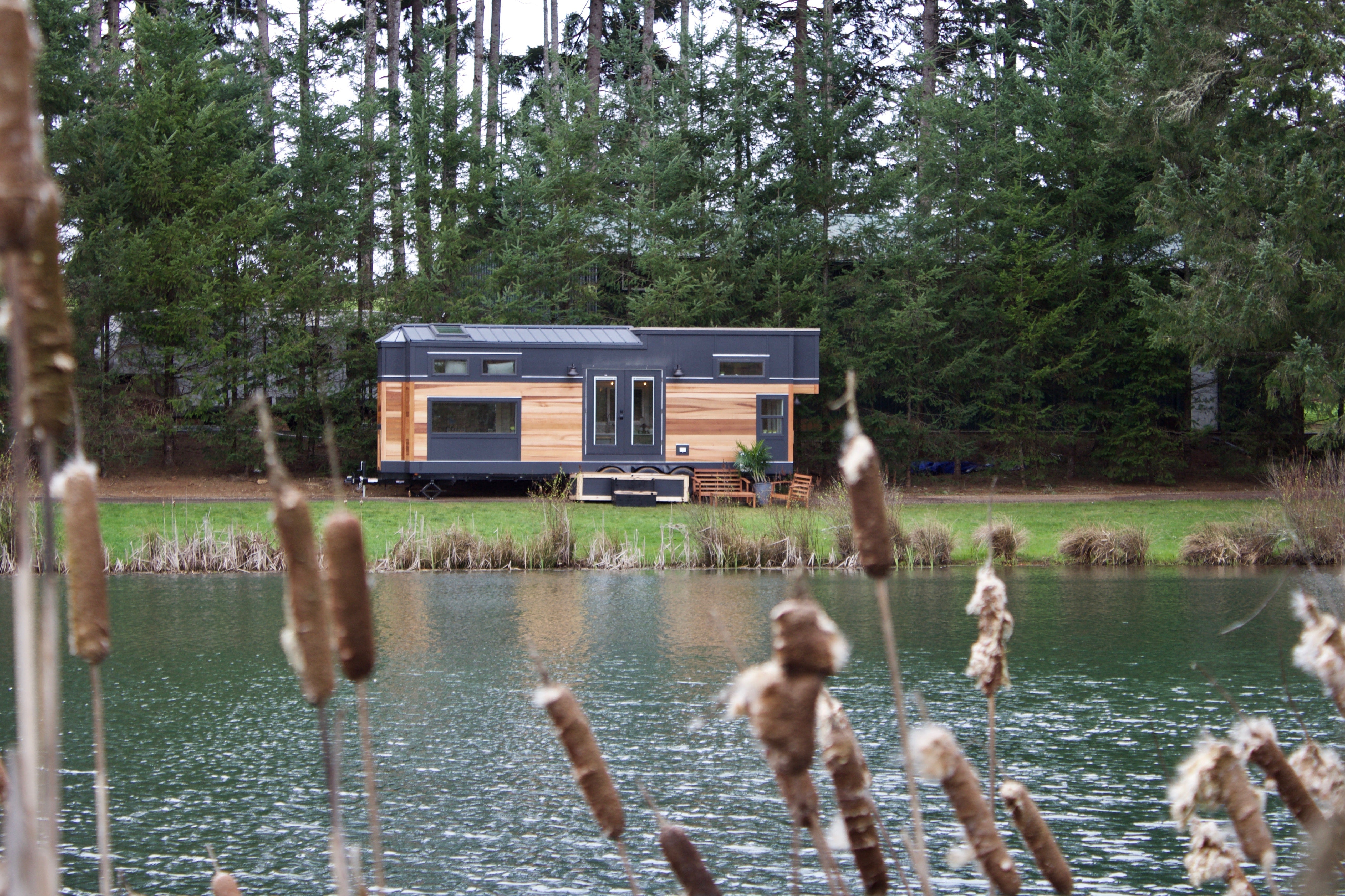
When most people sit down with a tiny house plan, they zero in on the floor plan, the loft dimensions, the kitchen layout, and the exterior cladding. Doors are almost always an afterthought, something to figure out later, once the walls are up. That's a mistake that costs tiny homeowners time, money, and sometimes structural headaches they didn't see coming.
The truth is, doors are one of the most consequential decisions in any small build. In a standard-sized home, a door that doesn't seal perfectly or swings the wrong way is inconvenient. In a tiny home whether it's on a foundation, on wheels, or nestled in a backyard as an ADU a poorly chosen door affects thermal performance, natural light, space efficiency, and even the overall aesthetic of the build. Getting it right from the planning stage pays dividends for the life of the home.
Here's what you need to know before you specify doors in your tiny home plans.
Square Footage Changes Everything About Door Selection
In a 400-square-foot home, a standard 36-inch inswing door can eat up a meaningful chunk of usable floor space when it's open. That's why so many tiny home designers including the team behind the plans here at TinyHousePlans.com default to sliding doors, barn-style hardware, or French doors that fold flat against the wall.
But there's more to it than just swing direction. Door thickness, frame depth, and the rough opening in your wall framing all interact with each other. If you're building with SIPs panels or extra-thick insulated walls (both common in tiny home construction for their thermal efficiency), you need doors that are designed to work with deeper frames. Standard big-box doors are often built assuming a 2x4 or 2x6 wall. Get your wall assembly sorted first, then specify your doors around it.

Exterior Doors: Insulation and Air Sealing Come First
In a tiny home, your exterior envelope is working harder per square foot than it does in a conventional house. You have less thermal mass, and the ratio of exterior wall to interior volume is higher. That means a poorly insulated or poorly sealed door has a proportionally bigger impact on your heating and cooling loads.
Look for exterior doors with a low U-factor (the lower, the better for insulation) and a high-quality compression or foam weatherstripping system. Fiberglass and insulated steel doors tend to outperform solid wood on thermal performance, though wood doors remain popular in cabin-style and rustic builds for their aesthetic. If you're building in a cold climate, consider triple-point locking hardware: it pulls the door tight against the seal at three points rather than one, dramatically reducing drafts.
Working with a quality door supplier makes this process significantly easier. Companies like RW Doors carry a wide range of residential exterior doors suited to different wall configurations, climates, and style preferences worth exploring during the planning phase when you can still adjust your rough openings.
Interior Doors: Maximize Space with Smarter Hardware
Inside your tiny home, the goal is almost always to preserve as much usable floor space as possible while maintaining privacy and acoustic separation between zones. Here's how different door types stack up:
Pocket doors slide entirely into the wall cavity, which means zero swing clearance required. They're ideal for bathrooms and bedrooms in small builds. The tradeoff is that installation requires planning ahead; you can't easily retrofit a pocket door into a framed wall. This is another reason to think about doors during the planning phase, not after framing is complete.
Barn doors hang on surface-mounted hardware and slide along the wall face. They're easier to install than pocket doors and carry a popular aesthetic that works well in the rustic, cabin, and Scandinavian-style homes that feature prominently in our plan catalog. The downside is that they require clear wall space beside the opening for the door to slide into which isn't always available in very compact layouts.
Bifold doors work well for closets and utility spaces. They fold in half, so they only need about half the swing clearance of a standard hinged door.
Standard hinged doors are still perfectly appropriate in many tiny home applications particularly when the swing direction is planned carefully so it doesn't conflict with furniture or opposing doors.
Garage and Workshop Doors: Think Beyond the Main Structure
Many of our customers aren't just building a tiny home, they're building a complete small-scale property. That often includes a detached workshop, a storage outbuilding, a barn-style garage, or a utility structure alongside the main house.
For those secondary structures, the door selection conversation shifts considerably. A detached workshop or garage needs doors that can handle regular heavy use, provide security, and in many cases accommodate larger equipment or vehicles. If your property includes any kind of loading or receiving function even at a modest homestead or working farm scale it's worth researching loading dock door solutions to understand what's available at the higher-performance end of the spectrum. Understanding the engineering principles behind heavy-duty door systems can also inform smarter decisions for residential and light-commercial outbuildings.
Glass Doors and Natural Light
One of the most effective design moves in tiny home architecture is using glass doors or doors with large glass lites to borrow natural light from adjacent spaces. A bathroom with a frosted glass door feels larger and less cave-like. A sleeping loft accessed by a glass-panel door can share light with the living area below. French doors onto a deck extend the visual footprint of the interior and create a seamless indoor-outdoor connection that makes a small space feel expansive.
This strategy appears throughout our plan catalog for good reason. On many of our A-frame and cabin designs, exterior doors with large glass panels face south or east to maximize morning light and passive solar gain. If your site has a strong view orientation, aligning your primary glass doors and windows toward that view is one of the highest-impact decisions you can make.

Don't Forget the Rough Opening
Every door requires a rough opening, a framed gap in your wall that's slightly larger than the door's nominal size. Standard practice is to add about two inches to the width and two and a half inches to the height of the door to calculate your rough opening. But this varies based on the door manufacturer's specifications, your wall assembly, and whether you're using a pre-hung door unit or a slab door with a separate frame.
If you're working from our plans, rough openings are called out on the construction drawings. If you're customizing a plan or working with a builder who's making substitutions, double-check that any door changes don't require rough opening modifications because changing a rough opening after framing means cutting studs, adding new headers, and potentially disturbing load paths. It's one of the more expensive corrections to make mid-build.
Final Thoughts
Tiny homes demand thoughtful decisions at every scale, and doors are no exception. The right door in the right location, properly insulated, appropriately sized, and matched to your wall assembly contributes meaningfully to comfort, efficiency, and the overall livability of your small build.
Whether you're building from one of our cabin plans, an A-frame, a tiny house on wheels, or a small home on foundation, take time during the planning phase to specify your doors with the same care you'd give to your insulation system or your roof pitch. It's one of those details that experienced builders always say they wish they'd paid more attention to the first time around.
Browse our full collection of tiny home plans at TinyHousePlans.com, and reach out if you have questions about how any of our designs handle door placement, rough openings, or exterior envelope details.
Share: