

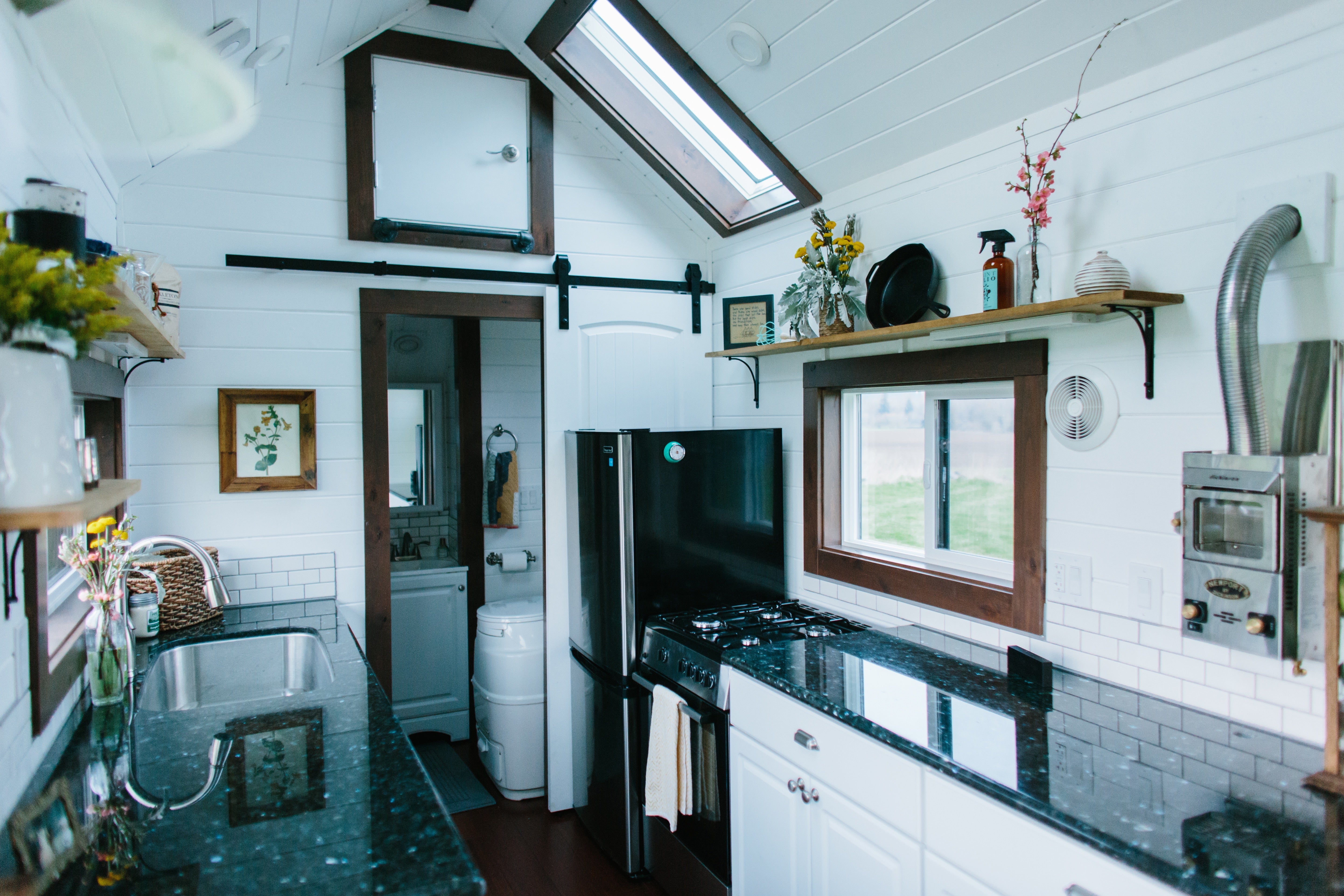
Small homes are in style, both due to fashion and the economic status of the world. With high prices of land, buyers naturally compromise on the square footage in lieu of actually owning a house.
That said, smaller houses aren’t necessarily a compromise. With smart choices, you can make use of every available foot and create a home that is stylish and practical.
One of the smartest ways of achieving the design goals is to use mirrors. From compact bathrooms to shared living areas, mirrors can subtly reshape how a tiny home feels. They can help interiors appear brighter, larger, and more thoughtfully designed.
Today, we are going to teach you how you can use mirrors in this way.
How Mirrors Improve Light and Space in Tiny Homes
Before we begin, we must understand why mirrors are so effective at improving lighting and space.
Mirrors reflect both natural and artificial light around the room. They effectively increase the surface area where light falls, thus they brighten the interiors and reduce the amount of shadows.
Darks, shadowy rooms feel smaller than they really are due to psychological factors. With extra light, those psychological triggers do not occur.
Another thing mirrors do is give the illusion of depth. If you have ever been to a gym, then you understand this. They usually have large floor-length mirrors spanning a wall, making the room appear twice its size.
In compact layouts where adding windows or expanding square footage isn’t an option, mirrors offer a simple way to make interiors feel more open and balanced.
Now, bear in mind that different types of mirrors enhance lighting and space in their own specific ways. They are also dependent on where and how they’re used. So, it is important to learn about them.
So, here are several types of mirrors that can make a noticeable difference in a tiny home interior.

Different Types Of Mirrors Suitable For Tiny Homes
-
Wall-Mounted Mirrors for Space Expansion
If you want to make a room look bigger, then wall-mounted mirrors are a must. These are usually very tall and are placed a foot or two above the floor. They are placed by sticking them against a wall or a large cupboard door.
These mirrors reflect the room back into itself and make it look bigger than it is. If you place them in a narrow hallway, a similar effect can be achieved.
If you place such a mirror opposite a window or entryway, it helps amplify natural light and gives the space a more open, airy feel. That’s something every tiny home benefits from.
-
Vanity Mirrors For Small Bathrooms
In a small home, bathrooms are often the smallest rooms. That’s why it's important to use mirrors in them smartly. The most suitable choice is a vanity mirror. Considering the various uses of a bathroom, vanity mirrors are the most suitable because they can do three things:
-
Make the space feel bigger
-
Provide or enhance lighting
-
Add to the design of the bathroom
To achieve those effects, you can use vanity mirrors with LED lights and a frameless design. If frames are a personal preference, then soft frames can also work well.
If you go for vertical mirrors, then they can draw the eyes upwards and enhance the sense of height. Another option is to use a cabinet with mirrored doors. This type of vanity mirror can provide both practical and design purposes.

-
Full-Length Mirrors For Lighting and Space
Full-length mirrors are amazing at enhancing the space and depth of a room. They extend from the wall to the ceiling and usually fit on one wall. They make a room appear both taller and wider than it really is, so it avoids the feeling of claustrophobia that smaller rooms can give.
You don’t always have to mount full-length mirrors; they can be leaning as well. Leaning or wall-mounted full-length mirrors work well near sleeping areas, closets, or entry points.
They’re especially effective in homes with lofts, where vertical space is a key design advantage because the length of these mirrors really makes the vertical space shine.
-
Decorative Mirrors as Statement Pieces
Decorative mirrors are awesome for elevating the aesthetic appeal of a room. In a tiny home, decor needs to be intentional. Decorative mirrors can help with that because they can act as statement pieces without overwhelming the space.
You can use a variety of options here. You can experiment with unique shapes, subtle frames, and various materials like wood or metal to fit the overall interior design of your house.
Decorative mirrors like these are far better than hanging art pieces because they not only look good but also improve lighting and reduce the room's visual weight.
-
Mirrored Furniture and Built-Ins
So far, we have discussed mostly wall-mounted mirrors, but you don’t have to adhere to that rule all the time. There are plenty of options for mounting mirrors.
For example, you can mount mirrors on cabinets, closet doors, and even on the inside of cabinets. This can help reduce the visual weight of furniture.
When it comes to kitchens or your dining area, you can add some mirrored accents that don’t take away from the rest of the decor, but still reduce the visual weight of the space. They reflect light but are small enough not to draw too much attention. This looks great when paired with a transitional or modern interior design.
-
Entryway Mirrors for First Impressions
Entryway mirrors are a great addition to a small home. They are usually placed near the front door (on the inside, of course). They create a sense of separation between indoor and outdoor spaces.
They also let you take a last glance at your outfit before heading out so that you can fix anything you overlooked. Not only that, but they also make the entryway feel bigger and more welcoming.

Conclusion
In a small home, mirrors are more than just decoration; they are a strategic element that can enhance the space and the aesthetics. Their reflective nature improves lighting, reduces the visual weight, and makes spaces appear larger.
Selecting the right mirror type will further enhance these effects because they will mesh with and complement the type of space and decor. In this way, homeowners can create interiors that feel intentional, comfortable, and visually balanced without sacrificing any square footage.
Share: