

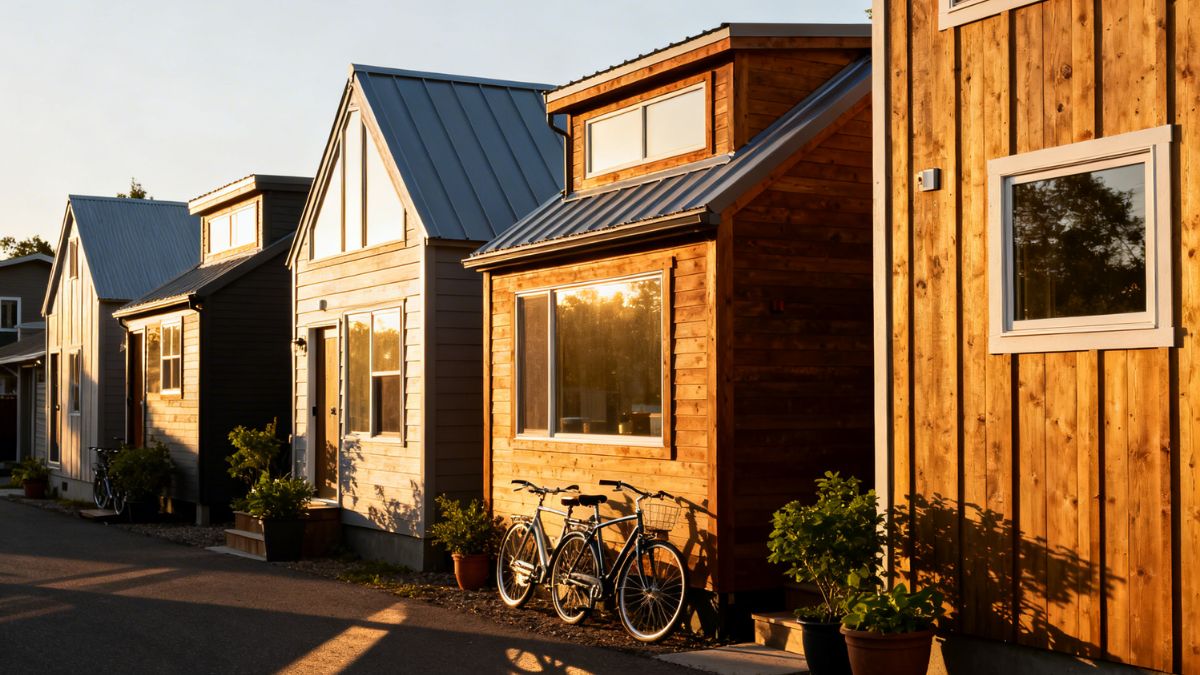
As people become more aware of the environment and look for new ways to live, tiny houses have emerged not just as a sensible alternative to traditional homes but also as places where we can really study what makes us feel comfortable.
How tiny homes are built and how they’re heated clearly change how people in them feel, particularly their perception of temperature. To work out what makes tiny homes so appealing, it’s important to know why we find a constant warmth more pleasant than heat that comes and goes, especially when that warmth is delivered by modern low-temperature systems such as heat pumps.
How Home Heating Has Changed
In today’s discussions about heating homes, the focus usually turns to technology, namely, the shift from the usual boilers to low-temperature heating, including systems powered by heat pumps. Though the technical details are certainly vital, we’re going to turn to the psychological side of comfort and how that depends on the details of heat transfer.

Old boilers often work by heating the water, sending it through radiators, and then cooling it down, resulting in large temperature swings. For those who live in tiny homes and often prioritise efficiency and comfort, it’s important to understand how their heating affects their everyday life. In contrast, low-temperature heating supported by heat pumps is designed to run steadily, maintaining an even background warmth rather than sharp bursts of heat.
Comfort Psychology: How We Feel Heat
At the heart of comfort psychology is the complex link between where we are and what we feel. If we think about how temperature affects our comfort, it’s clear our brains do not simply note warmth as warm; instead, they take into account our pasts, recollections, and expectations too.
Low-temperature heating, often using heated floors or wall panels and commonly paired with heat pumps, provides all-round, steady warmth. Not only is this physically good, but it also creates a state of mind that helps us unwind; the heat’s steadiness is like the warmth of the early sun, or the gentle heat of a comfortable blanket. These things build up a strong link between even heat and being safe, secure and generally okay.

But the changeable nature of boiler heating, with its sudden rises and falls, can make us feel agitated or anxious. Studies show that rapid changes in temperature can trigger stress responses, making us more anxious and less happy. So, the idea that stable heat feels warmer isn’t just about what we physically sense, but the small details of how we emotionally react. Heat pumps, by maintaining lower and more consistent flow temperatures, naturally support this sense of stability.
How Space Affects Experience
With respect to compact houses, the way the area is laid out increases the effect of heating, and, because of their size, those who occupy them are much more sensitive to any changes in temperature than individuals in larger properties. Within a small house, the difference between rooms, such as a chilly kitchen and a cosy living room, is obviously larger and may impact how pleasant the whole house feels.
Low-temperature heating, particularly when delivered through floor systems connected to heat pumps, with warmth from the floor or walls, heats a place evenly and can often cut down on draughts in houses with older heating. This equal distribution of heat makes people feel secure; this is one of the reasons why small homes are so attractive.
From Impersonal to Intimate
The move away from boilers towards low-temperature heating and heat pumps also reflects a broader societal shift towards greater awareness of what we consume. In the small-house movement, this change represents a desire for connection, not just to the house we inhabit, but to the natural world.
Low-temperature heating often incorporates design qualities which assist environmental responsibility, particularly when paired with efficient heat pumps, and so links those who live in a place to the degree to which they impact the natural world. This connection fosters a sense of comfort; individuals are glad to realise that their home embodies their beliefs. The continuing heat from these systems provides not only a secure, warm place but also a feeling of being a part of things.
Practical Points Without Too Much Detail

It is important to put this conversation in a way that is connected to what people actually do, rather than a complex, technical description. Those who own houses, and in particular those who adopt the principles of small housing, are typically motivated by a desire for simplicity and environmental considerations.
The selection between heating systems, whether traditional boilers or modern low-temperature solutions such as heat pumps, is an example of this: a purposeful choice for constant heat that creates comfort, rather than merely doing what is usual. Though the details of replacing old boiler systems with low-temperature ones or installing heat pumps are not part of this discussion; it is important to see how these choices improve life at home.
The Area of Personal Feeling
Compact houses, due to their size, require those who live in them to come to terms closely with all aspects of their surroundings. A constant source of heat, often maintained by a well-designed heat pump system, supports this by ensuring the temperature does not detract from the sensation of living comfortably but rather increases it. As a result, people who own small houses receive not only energy savings and environmental advantages but also a stronger sense of happiness.
Conclusion: Accepting the Future of Heating in Small Houses
As we continue to find our way in the changing world of house design and comfort, it’s important to see the links between new technology and our feelings. The shift from heating systems with large temperature swings to those that prioritise constant, low heat, often delivered by heat pumps, is a change that aligns with the ideas of the small-house trend.
Those who live in these cosy shelters can enjoy the many layers of comfort that come from a setting carefully designed to support not only physical needs but also emotional well-being. At the end of it, accepting low-temperature heating and heat pumps in small houses is not only about reducing your carbon footprint or improving energy saving; it is an invitation to find again what true comfort in one’s living space means: a harmonious balance of psychological health and physical warmth which makes small living different from the usual.
As you think about moving to a small house or improving your current heating plan, take into account the importance of the choices which are available. For those who seek environmentally friendly answers that fit both comfort and care for nature, Aventus Eco offers a number of options, including heat pump solutions, designed to suit your way of life in a small house while upholding the trend's main principles.
Share: