

A tiny home uses less material than a conventional house, but every square foot of siding, sheathing, and insulation carries more consequence. The structure still faces full-size sun, rain, wind, and humidity, even though its shell has less material to absorb mistakes.
A tiny house on wheels also faces vibration, flex, and highway stress while staying within strict weight limits. Those forces can open joints and expose weaknesses that might remain hidden in a stationary building. As a result, choosing tiny house materials is not simply about filling a shopping list. The useful question is which choices reduce future maintenance without creating problems elsewhere.
What Actually Makes a Tiny Home Last
Long-term durability comes down to four connected decisions: what the frame is made of, which exterior skin protects it, how the seams manage water, and whether the wall can dry. Most materials fail through moisture and movement rather than ordinary wear, which is why finishes often need replacement before the underlying structure does.
The best tiny house materials balance low weight with moisture and mold resistance. Although the average cost per material varies, durability upgrades generally add hundreds rather than thousands because the surface areas are small.
Building costs less than buying a finished unit only when the owner supplies much of the labour. Builds below $10,000 usually depend on donated or salvaged components, not unusually cheap new products. The savings come from protecting the shell first, since finishes can be changed later, while hidden structural damage is difficult to correct.

Building a Shell That Handles the Road
Every pound added to a stronger surface reduces the tiny house trailer’s remaining payload. Shell decisions must therefore stay within fixed weight limits for towing. Durable construction means placing strength where movement, weather, and repeated travel create the greatest strain.
Steel or Wood for the Frame
A light-gauge steel frame will not rot, warp, or feed mold. It also resists racking as a tiny house on wheels accelerates, brakes, and crosses uneven roads. However, steel conducts heat through the wall, so the assembly needs continuous exterior insulation or another thermal break to prevent condensation.
Kiln-dried framing lumber costs less, accepts ordinary screws, and can be adjusted with hand tools, making it more forgiving for owner-builders. The trade-off is movement: lumber expands and contracts with humidity, while persistent leaks behind the sheathing eventually cause decay.
Comparing durable framing options means accounting for insulation, thermal bridging, tools, and repair access, rather than focusing only on stud prices.
Siding That Shrugs Off UV and Rain
Exterior siding and trim carry more routine maintenance than most parts of the shell. Untreated softwood exposed to strong sun generally needs refinishing every three to five years. Skipping that work accelerates checking, fading, and moisture uptake.
Metal siding avoids repainting for much longer, weighs relatively little, and does not feed rot. Fibre cement can also provide a decade or more between major finish cycles, although its weight and brittle edges require careful installation on a mobile structure.
Modified timber retains the appearance and workability of wood while changing its response to moisture. In acetylated timber, the acetylation process alters the wood’s cell structure, reducing water absorption and removing the conditions rot organisms need. That limits swelling, shrinking, and repeated coating work.
Metal roofing follows the same weight-conscious logic. It costs more initially than asphalt shingles, but it weighs less, sheds snow, and has no granules to lose. Secured edges also handle towing winds better than shingle tabs that can lift under air pressure.
Interior Surfaces That Do Not Crack
Drywall works in a stationary house because the framing moves relatively little. On a trailer, vibration and flex concentrate stress at taped seams and corners, producing recurring hairline cracks.
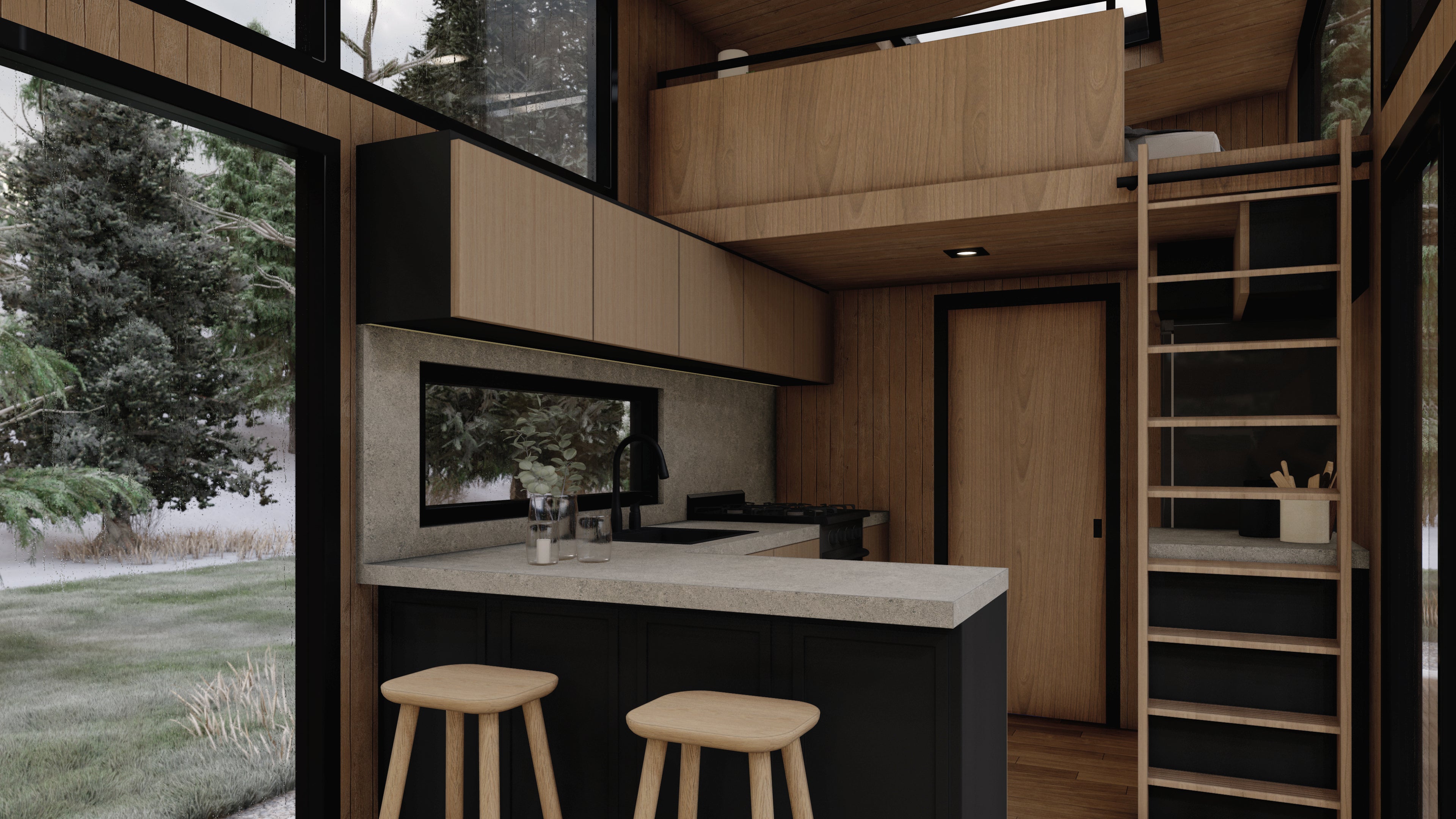
Plywood and tongue-and-groove boards are practical drywall alternatives because their joints accommodate movement instead of hiding it. These lightweight materials also hold hooks and shelves without specialised anchors, although unfinished timber can move with indoor humidity.
PVC wall panels ignore splashes and wipe clean, making them useful behind a kitchen run or around a shower. Covering every wall with them can feel commercial, so selective use places their humidity resistance where it offers a clear maintenance benefit.
Moisture Control Works as One System
A tiny home has thin walls, limited air volume, and occupants who still cook, shower, and breathe as they would in a larger building. Humidity concentrates quickly, while the compact wall assembly has little capacity to buffer moisture. Accordingly, moisture and mold resistance comes from the complete drying system, not one waterproof product.
Housewrap, Flashing, and the Drainage Path
Housewrap succeeds only if every overlap directs water down and out. One reversed lap above a window can funnel rain behind the sheathing instead of shedding it. Installation sequence matters more than the logo printed on the roll.
Flashing should protect window sills and heads, door openings, roof-to-wall junctions, and the exposed edge above the trailer deck. These details cost little during framing but become difficult to reach after exterior siding and trim are installed.
Fasteners belong to the same drainage system. Stainless steel or hot-dip galvanised screws tolerate coastal air, spray, and road salt. Cheap plated screws can corrode quickly, leaving rust trails and weakening the connections holding cladding against towing pressure.
Vapor Control and Ventilation Indoors
Vapor control manages moisture moving from the occupied space toward colder wall layers. It belongs on the warm side of the insulation, although that side changes with the climate and assembly design. Incorrect installation can trap condensation against the sheathing until the wood softens out of sight.
Mechanical ventilation removes moisture before the wall must handle it. A bathroom fan and range hood should discharge outdoors, while trickle ventilation supplies replacement air. Recirculating hoods catch grease but return water vapour to the room.
Two people cooking and showering in roughly 200 square feet can release several litres of water vapour each day. Without a clear exit path, that moisture settles on cold windows, steel framing, and poorly insulated corners.

Insulation That Matches Your Climate
Insulation controls more than indoor temperature. It also determines where surfaces become cold enough for condensation, making insulation choice a long-term maintenance decision rather than simply a comfort upgrade.
R-Value and Thermal Mass, Side by Side
Fiberglass insulation is inexpensive and light, but it loses performance when compressed around wiring or installed with gaps beside studs. Moisture further reduces its effectiveness, making it a poor match for a thin wall that flexes in transit and contains concentrated humidity.
Rigid foam and closed-cell spray foam provide more R-value per inch, which helps where floor area matters. They also resist moisture, but installation errors are difficult to correct. Gaps around rigid boards create air paths, while poorly applied spray foam can conceal uneven coverage.
R-value drives comfort in cold and mixed climates by slowing heat flow. Thermal mass works differently by absorbing daytime heat and releasing it later. It pays off mainly in hot, dry climates with large differences between daytime and nighttime temperatures.
Natural and Reclaimed Options, Judged Honestly
Hempcrete and rammed earth provide thermal mass and can buffer humidity, but both add substantial weight and require long curing or drying periods. Those constraints effectively rule them out for towable construction governed by weight limits for towing.
Cordwood and reclaimed or salvaged materials can produce sound walls and distinctive interiors if the stock is dry, straight, and free from insects. However, finding enough consistent material takes time, and variable dimensions slow installation. Guidance on sustainable material choices can help distinguish workable reuse from materials that create hidden repair liabilities.
The EPA supports salvaging and reusing construction materials, but reuse still requires careful inspection. Reclaimed windows are a frequent false economy because failed seals, damaged frames, and single glazing can undermine insulation elsewhere. Salvaged timber is easier to inspect, dry, trim, and repurpose without compromising the envelope.
Choosing Materials You Will Not Fight Later
The durable choice is rarely the most expensive material on the invoice. It is the one that stays dry, tolerates movement, and can be maintained without dismantling half the building. Spending more on stable cladding, compatible fasteners, or correct flashing trades a small amount of money and weight now for fewer repair weekends later.
The frame, cladding, and drying assembly should be settled before flooring, cabinetry, or decorative finishes. Those three choices become difficult to revisit after the shell is closed. A tiny home lasts when its materials work together, not when one premium product is expected to compensate for weak detailing elsewhere.

Share: