

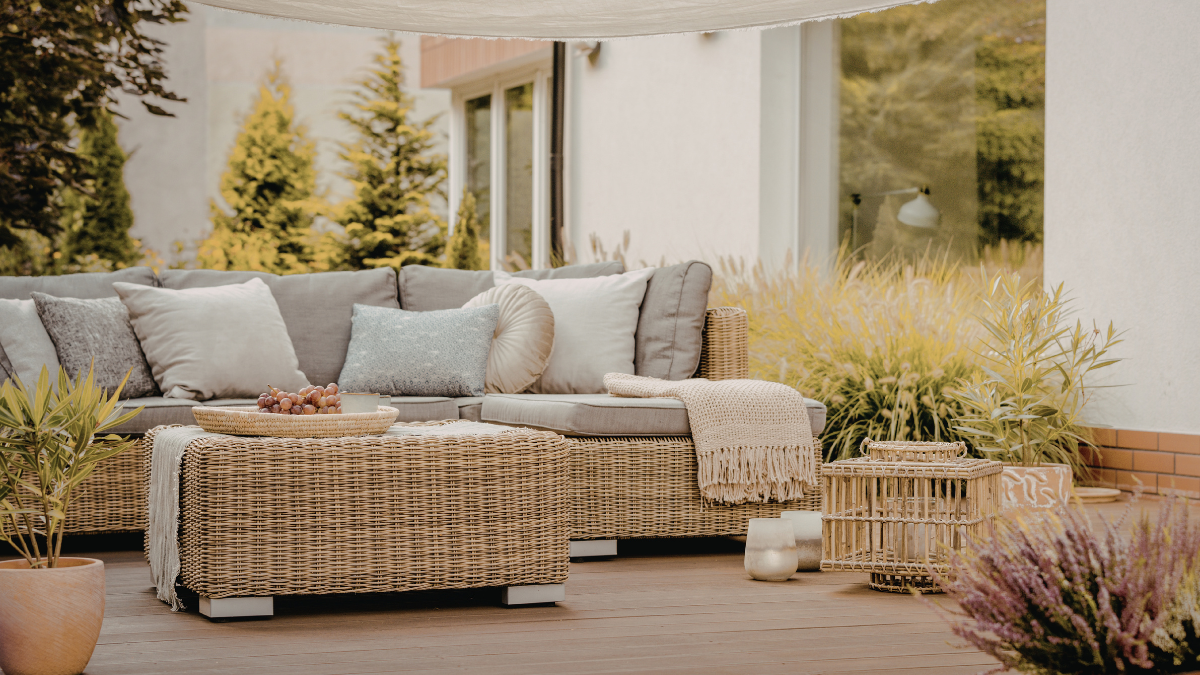
Although a small patio may be able to serve as an area in which people can relax, eat, or entertain guests, this can only be achieved through proper arrangement of the space at their disposal. Having little amount of space does not mean that the homeowners cannot effectively use their patio.
How the tables, chairs, and other furniture pieces are arranged could determine if the patio is going to appear spacious or cramped. It all begins with knowing how the people will use the area, how they will move around, and which furniture pieces have the most value.
Measuring the Available Space
Precise measurements must be taken before purchasing or moving any piece of furniture in a small patio. Measurements in terms of the length and width of the usable area can help set the stage for what furniture can fit. The homeowner should also take into consideration doors, steps, railings, walls, and planters among other fixed structures that may limit the amount of usable floor space. This way, the patio becomes more accessible, and furniture does not get in the way when trying to navigate through the space.
Measurements should also take into account the purpose of the patio. For instance, if the patio will be mainly used for reading, only a couple of chairs and a small table may be required. Similarly, a patio meant for dining may need a larger table with a number of seats. In addition, measurements can prevent large pieces of furniture from making a big part of the limited space. A simple sketch of where the furniture would be placed can be made, whereas measurements can ensure that it will work out.
Choosing Furniture Based on Scale
Size of furniture plays an important role in making a small patio look spacious. Furniture items like large sized chairs and deep sofas take up much space just because of their size, even if a few pieces are to be arranged there. Small chairs, benches, and small tables offer comfortable seating but do not make the patio hard to move around in. Therefore, outdoor furniture needs to be chosen by the size of the patio rather than by appearance and capacity alone.
Furniture with a small footprint may be another way to arrange a small patio. Round tables may come handy in the place where square tables with corners are hard to arrange due to the restriction of movement in that area. Benches may provide comfortable seating along the wall without using as much space as several chairs do.

Creating Clear Walking Paths
The use of a clear pathway in front of the house is vital for small patios. It should be easy for furniture to allow access through doors without creating any hindrances that will make the movement around the place more difficult. Placing big furniture against the walls and patio edge can help to create a pathway. This makes the patio spacious and makes movement between the indoors and outdoors easier.
Walking pathways are also something that must be taken into account when the chairs are taken away from the table. A dining setup might work with the chairs tucked in, but there could be far less space when the dining area is occupied. The homeowners need to ensure that there is enough space left behind the chairs and around certain spots that are regularly used.
Using the Patio Edges Effectively
In a small patio, the sides of the patio can be used advantageously for placing furniture. Chairs, benches, and smaller furniture can be placed along the sides of the patio wall leaving an open area in the middle. This is especially useful when the patio is going to serve many purposes. By placing larger furniture items around the patio, you can create a seating area without cluttering the whole floor area.
You can take advantage of corners as well for placing furniture items efficiently. You can place a corner bench where there is no space for any furniture, and beside that, you can place a side table. Furniture items should not be placed too close to the walls where they are hard to clean and maintain. A little space will help in maintenance and protecting your furniture as well.
Selecting Flexible Furniture
The use of flexible furniture becomes particularly helpful in case the patio has multiple uses. The table can be relocated whenever the extra space on the floor is required, whereas folding chairs can be packed away when they are not necessary. Furniture that has various purposes may allow you to save on the total amount of furniture. Thus, a bench can act as a place where you can sit down and keep your cushions or other patio accessories below.
Modular designs can also be used as another solution. Separate chairs may be relocated wherever needed in order to discuss something with each other or joined together if you need extra seats. A small table can be utilized as a surface for having dinner and drinks.
Considering Comfort and Practical Use
Comfort is something that ought to be taken care of even in case there is a constraint of space. Furniture that is compact in design but offers poor support will not encourage the use of the patio frequently by residents. Comfortable chairs need to have sufficient room for sitting comfortably while tables need to be at reasonable heights. Even though cushions can add to comfort, they need to be kept properly in case of adverse weather conditions.
The placement of the furniture needs to depend on the availability of sunlight, shading as well as weather conditions. The chair that is placed under the hot afternoon sun will not offer any comfort while a table near a shaded area would be more useful throughout the day. In case there is any shading available on the patio, furniture placement will be easier.

Making Room for Patio Accessories
Accompanying furniture items ought to be incorporated into the design instead of adding them without thinking about space constraints. Accessories such as planters, light fixtures, rugs, storage boxes, among others, can help enhance the comfort of the patio; however, excess accessories will reduce the total available space on the patio floor. It would be wise for homeowners to establish which accessories can actually come in handy before cluttering the available spaces.
Another important aspect to consider while arranging furniture is that of storage. Accessories like cushions, tools, among others, need some designated place when not in use. Storage places can be found beneath a bench or around a wall that is not in use. This will help to avoid any clutter on the floor.
Keeping the Arrangement Visually Balanced
Not only does furniture arrangement influence ease of moving around, but an unbalanced arrangement may result in certain areas being too crowded or not being used enough, whereas a balanced arrangement means that furniture is arranged in such a way that the intended activity is facilitated without too many objects accumulating in one area. The size of furniture could also match the size of the area in order to create a comfortable look.
The arrangement will take into account the view from indoors. Since it may be possible to see the patio from the windows of a kitchen or living room, the neat arrangement of furniture can also positively impact the general look of the property, while keeping excess objects away from the sightline could open up the area. This simple step could make a difference without involving any extensive renovations or building supplies.
Testing the Arrangement Before Final Placement
Testing an arrangement of furniture prior to its permanent placement will avoid any changes in the future. The homeowners may take temporary objects, such as table and chair replacements, which will help them to see if it is easy to pass doors and pathways and also sit. This method will show possible difficulties in spacing even if all measurements were correct.
Then furniture will be arranged based on the way it feels during the process of usage of the patio. Some arrangements may seem to work well in a design but may be inconvenient for sitting at the table and walking around it while the chairs are occupied. It will be better to make some changes before buying new furniture.
Space planning in the smaller patio involves considerations of space, movement, comfort, and functionality. Using measurements, choosing the right furniture scale, maintaining unobstructed walkways, and making use of the patio’s corners can maximize the usable floor area in the space. Flexible furniture offers other possibilities in arranging furniture when the patio is put to various uses, while good placement of accessories can avoid any clutter. The arrangement of the furniture is not all about filling up any free space.
Share: